How to Make a Mismatched Bridal Party Work When Your Maids Have Wildly Different Body Types
How to Make a Mismatched Bridal Party Work When Your Maids Have Wildly Different Body Types
You’ve asked your favorite people to stand beside you on the most important day of your life. They’re your sister, your college roommate, your best friend from work, and the cousin who knows you better than anyone. They’re also five-foot-two and six-foot-one, athletic and curvy, broad-shouldered and petite, and they all have completely different ideas about what makes them feel beautiful. The dream of a single, identical gown for everyone? It’s starting to feel less like a dream and more like a diplomatic nightmare. But here’s the secret wedding planners know intimately: a mismatched bridal party, handled with intention, doesn’t look like a compromise. It looks like a collection of individual women, each confident and radiant, united by color and occasion rather than a one-size-fits-all silhouette. And that, frankly, photographs far more beautifully than a row of uncomfortable bridesmaids in identical dresses they secretly hate.
Dusty Rose Where One Maid Wears Chiffon
Before you even open a single gallery or browse a fabric swatch, decide what thread will hold your group together visually. The most common—and most forgiving—approach is a single color or color family, applied in different silhouettes and sometimes different fabrics. Think dusty rose where one maid wears a flowing chiffon A-line, another a sleek crepe sheath, and a third a lace fit-and-flare. The eye reads “pink bridesmaids” long before it registers that each dress is constructed differently. You can also unify by fabric—all silk, all velvet, all lace—across a spectrum of complementary hues. Or try one consistent neckline or sleeve length across varied silhouettes. The point is to give your maids and your photographer something to anchor to, so the differences read as intentional harmony rather than accidental chaos.
One Dress, Size 00 Through 30-Plus
There’s a wide spectrum between “everyone in the exact same dress” and “everyone in a completely different dress in a completely different color.” You’ll want to settle on how much variation your eye and your budget can handle. The simplest step is to choose one dress style and let each maid order it in her size—most reputable bridesmaid lines offer dresses in sizes 00 through 30-plus, though availability varies by brand, so check carefully. One step more flexible: pick one dress, but allow each maid to choose from two or three hemline lengths or sleeve options within that same style. Another option: select a single designer collection, where all dresses share a fabric and color palette but come in a dozen distinct shapes—strapless, halter, one-shoulder, high-neck, with or without a train. The most open approach: give your maids a color swatch and a general length guideline (floor-length only, please) and let them find their own dress from any retailer, any brand, as long as it matches the color. The wider your degree of difference, the more intentional you’ll need to be about the overall visual effect—but the happier each individual maid is likely to feel about her own fit.
The Strapless Gown That Stays Put on a B-Cup
This is the golden rule that experienced wedding planners return to again and again: a dress that fits well will always look better than a dress that’s technically more fashionable but doesn’t fit the person wearing it. When your maids have wildly different body types, the single most important factor in how they look and feel is whether the dress accommodates their actual measurements—bust, waist, hips, shoulders, and height. A strapless gown that stays put on a B-cup will be a source of anxiety for a D-cup maid who’s constantly tugging it up. A high-low hem that looks playful on a five-foot-four frame can read as awkward on a five-foot-eleven one. A sheath dress that skims a straight figure beautifully will cling in all the wrong places on a curvy one. Encourage your maids to order to their largest measurement and have the dress altered professionally. And consider offering a modest budget contribution toward alterations—it’s a gesture that speaks volumes about how much you value their comfort.
Burgundy Slip Dress, Sage Off-the-Shoulder
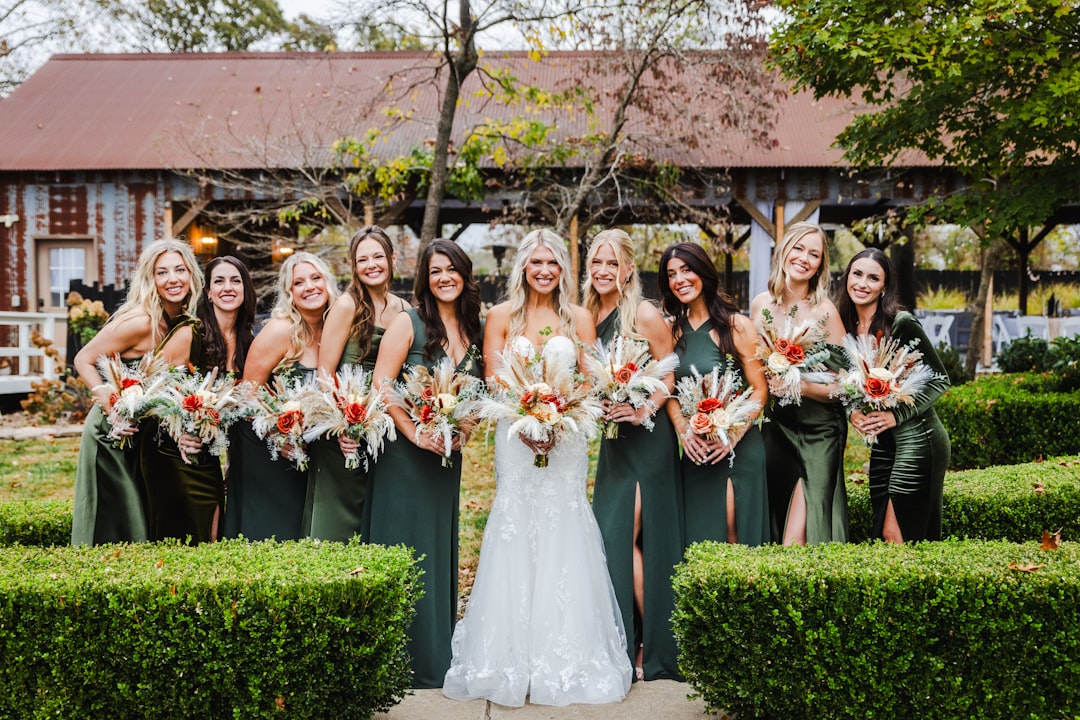
Choose a single color—let’s say a deep burgundy or a soft sage green—and let each bridesmaid select her own silhouette from a preselected brand or collection. The result is a group photo where all the dresses read as belonging to each other, even though one maid is in a sleek slip dress, another in a romantic A-line with a flounce, and a third in a dramatic off-the-shoulder gown. The key is to help each maid identify what works for her specific body. If she has broad shoulders, she’ll likely feel happiest in a V-neck or a halter that draws the eye inward. If she’s self-conscious about her arms, a three-quarter sleeve or a draped cap sleeve will feel like a security blanket she didn’t know she needed. If she’s petite, a dress with a higher waistline will elongate her frame. If she’s tall, a dress with a dropped waist or a subtle train will play to her height beautifully. Let her find her own version within your chosen palette, and you’ll have a group of women who walk down the aisle with real confidence rather than forced smiles.
Velvet That Hangs on Straight and Curvy
If color alone feels too loose for your vision, let fabric be your second anchor. Chiffon drapes differently on every body but reads as consistently romantic and floaty. Crepe offers a sleek, modern look that skims curves without clinging, though it shows every line, so it’s best for maids who feel comfortable in a more fitted silhouette. Velvet is luxe and forgiving, with a weight that hangs beautifully on both straight and curvy figures—perfect for fall and winter weddings. Lace adds texture and visual interest that can distract from fit issues, as long as the lace pattern itself isn’t too busy or overwhelming on smaller frames. You can even mix fabrics within the same color family, as long as you keep the overall effect intentional. A structured satin bodice paired with flowing chiffon skirt can accommodate a wider bust while skimming a fuller hip. A velvet bodice with lace sleeves offers coverage and elegance. The fabric itself becomes the conversation starter, not the fit.
Sweetheart for Small to Large, V-Neck for a Shorter Neck
In photographs, especially in group shots, the neckline is where the eye naturally lands. This is where mismatched body types become most visible—and where you can make the most strategic choices. A sweetheart neckline universally flatters almost every bust size, from small to large, and works well on both narrow and broad shoulders. A V-neck elongates the torso and softens a strong jawline, making it ideal for maids with shorter necks or rounder faces. A high neckline or a jewel neck can be elegant on a long, slender neck but can feel constricting on a fuller bust or a shorter frame. A one-shoulder neckline adds asymmetry and visual interest, drawing the eye away from any area your maid is self-conscious about. The trick is to let each maid choose her own neckline within your broader color and length guidelines. She knows her own proportions better than anyone.
Nude or Metallic Heels, All One Tone
Once the dresses are sorted, the small details can either reinforce the intentional mismatch or accidentally create visual noise. Your maids’ shoes are the first opportunity for unity—ask everyone to wear nude or metallic heels (or flats, if you’re on grass or cobblestones) in the same general tone, but let them choose their own height and style. A five-foot-eleven maid in three-inch heels next to a five-foot-two maid in flats will create a height disparity that might seem awkward in photos; consider suggesting a uniform heel height, or at least a narrow range. Hair and makeup can follow the same logic: choose a general style (up or down, natural or bold lip) but let each maid adapt it to her own features and comfort level. Jewelry should be simple and consistent—a uniform earring style, or a single bracelet, or no jewelry at all. The goal is to let the dresses do the heavy lifting of the visual story, while the details fade into a unified background that supports rather than competes.
Alternate Heights in the Lineup
If possible, gather your bridal party for a casual test shoot a few weeks before the wedding. Have everyone stand in the order you’ve planned for the ceremony and the reception—usually alternating body types and heights to create a balanced visual rhythm rather than a staircase of similar figures. A short maid standing next to a tall maid creates a natural visual interest; two short maids next to each other can look like a separate group. Take a few shots from different angles, including the traditional straight-on lineup, a more relaxed grouping where some maids sit on a couch or a bench, and a dynamic arrangement where everyone turns slightly toward the center. You’ll see immediately whether your mismatched dresses read as planned or whether a dress that looked perfect alone suddenly feels off in the group context. If something feels wrong, you still have time to swap a dress or adjust the seating arrangement.
Your maids are there to support you, to laugh with you, to cry with you, and to dance with you until the last song plays. When you give them the freedom to look and feel their best, you’re honoring the very relationship that brought them to your side in the first place.
📷 Photos: Kari Bjorn Photography (Unsplash), Katelyn MacMillan (Unsplash)