The Afternoon the Silk Stopped Cooperating
The Afternoon the Silk Stopped Cooperating
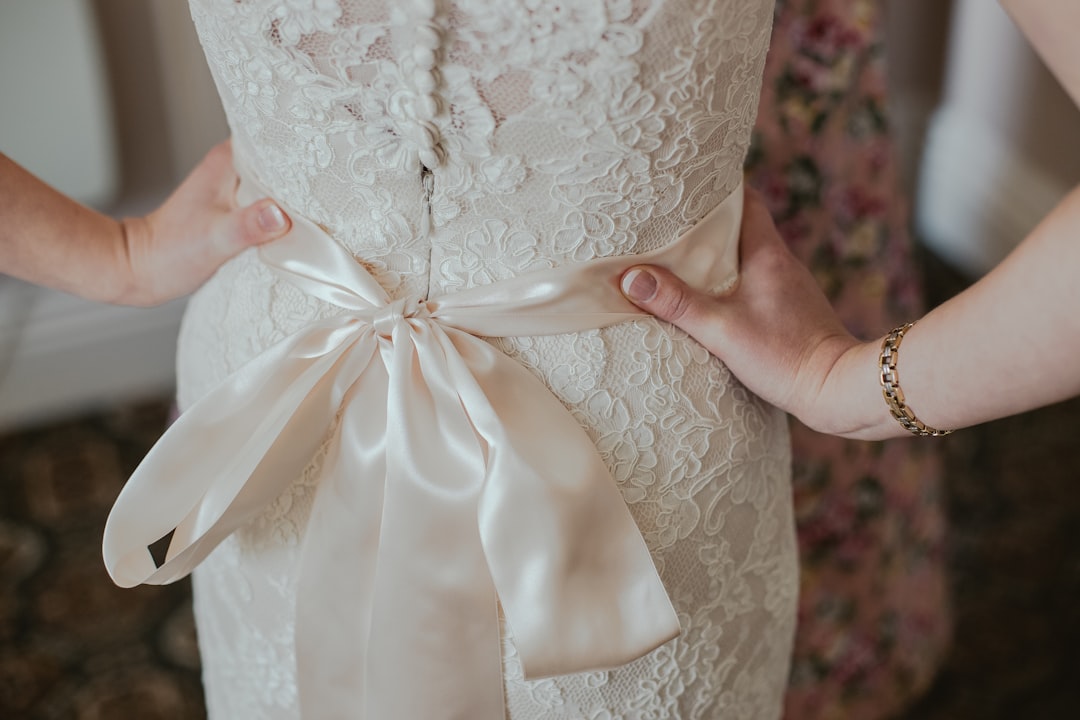
The fitting room at Bridal Atelier on West 28th Street had the particular kind of fluorescent light that makes everyone look slightly unwell. It was early May, two days before a Saturday wedding, and the bride—let’s call her the client, since that’s how the shop referred to her—stood on a low platform while a seamstress named Diane knelt at her feet with a mouthful of pins. The gown was an A-line in heavy crepe, clean lines, nothing fussy. What was supposed to happen next was a sash: six inches of ivory satin, tied in a bow at the natural waist, the sort of thing seen in a hundred bridal magazines and at least three thousand Pinterest boards.
What happened instead was that Diane looked up, took the sash in her hand, and said, “This is fighting the dress.” She didn’t mean it was too short or too long. She meant that the satin, with its stiff body and deliberate shine, was asserting a personality the gown didn’t have. The dress wanted to move. The sash wanted to hold still. The client had been persuaded by a well-meaning friend that satin was the only option for an A-line because it “defines the waist,” a phrase that turned out to mean nothing when the actual fabric was in hand.
Diane unpinned the sash, set it on the counter, and walked to a rack of trims near the back of the room. She came back with a length of raw silk ribbon—three inches wide, the color of a very dry champagne, with a matte finish that caught the bad light in a way that made it look deliberate. She held it against the dress. The contrast was immediate: the ribbon sat against the crepe like it had always been there. No announcement. No assertion. Just a quiet line that changed the whole geometry of the silhouette.
“Thing is,” Diane said, not looking up, “a sash is trying to be the center of attention. A ribbon belt is trying to do its job and get out of the way.”
A Wide Sash Sits on Top Like a Lid
The wedding industry has a peculiar relationship with the sash. It is, by almost every measure, a default. When a bride says she wants something at the waist, the first thing pulled from the display is a pre-tied satin sash, usually with a bow already shaped into it by someone in a factory. It’s the path of least resistance for a salesperson and, often, for the bride who doesn’t know there’s another option. But an A-line gown, by its nature, asks for something different. The skirt’s volume—whether modest or dramatic—creates a V-shaped negative space from the waist down. A wide sash sits on top of that space like a lid. A silk ribbon belt, narrower and more flexible, works inside it.
The structural difference is worth understanding, even for someone who never plans to think about fabric again. A sash is usually cut on the straight grain, with or without interfacing, and its job is to create a horizontal line that bisects the dress. That’s fine for a mermaid or a sheath, where the waist is a real architectural point. But an A-line’s waist is already doing work—it’s the hinge between the fitted bodice and the expanding skirt. Adding a heavy sash there can feel redundant, like putting a belt on a belt.
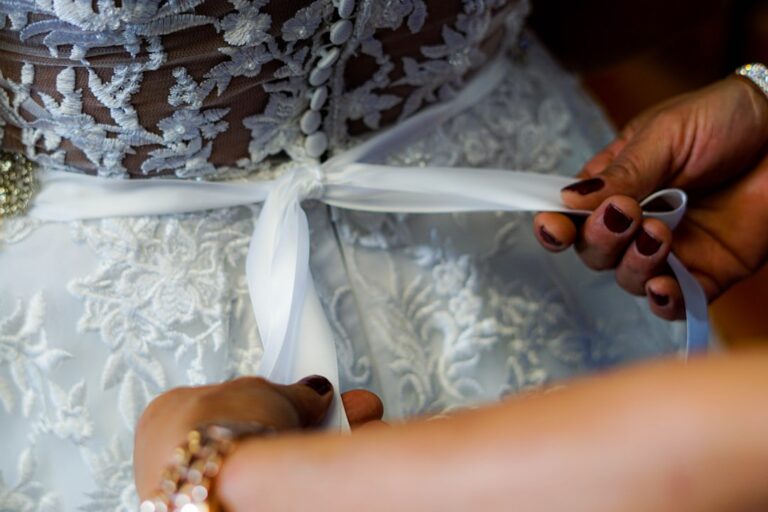
Silk ribbon, on the other hand, is woven, not cut. It has selvedge edges that won’t fray, so it requires no hem, no interfacing, no structure. It moves with the body rather than against it. A good silk ribbon belt, tied loosely and slightly off-center, follows the natural curve of the waist instead of fighting it. The effect is less about definition and more about suggestion—a line that the eye follows without being told to.
“Most brides don’t know they can ask for something besides a sash,” says Margaret Liao, who runs a small custom bridal accessories business out of a studio in Philadelphia’s Old City. “They come in holding a photo of a specific celebrity wedding from 2016, and the sash is right there in the photo, so they think that’s the only move. But if you show them a silk ribbon, the reaction is almost always the same—they touch it, and they relax.”
Liao’s operation is small enough that she picks her own silk, often from a supplier in Como, Italy, that she’s worked with for seven years. She stocks seventeen colors at any given time, none of them white. “White ribbon on a white dress is a missed opportunity,” she says. “You want something that’s close enough to match but just different enough to catch the light differently. That’s the whole trick.”
The Color Question Nobody Asks
The most common mistake, according to Liao, is choosing a ribbon that exactly matches the gown. “It disappears. You spend the whole day trying to see this thing you paid for, and it’s just—gone.” The better approach is to go one shade lighter or one shade darker, preferably with a slight undertone shift—a blush ribbon on an ivory dress, a champagne ribbon on a white dress, a dove gray ribbon on a silver-gray gown. The contrast should be discernible but quiet, like harmony in music rather than melody.
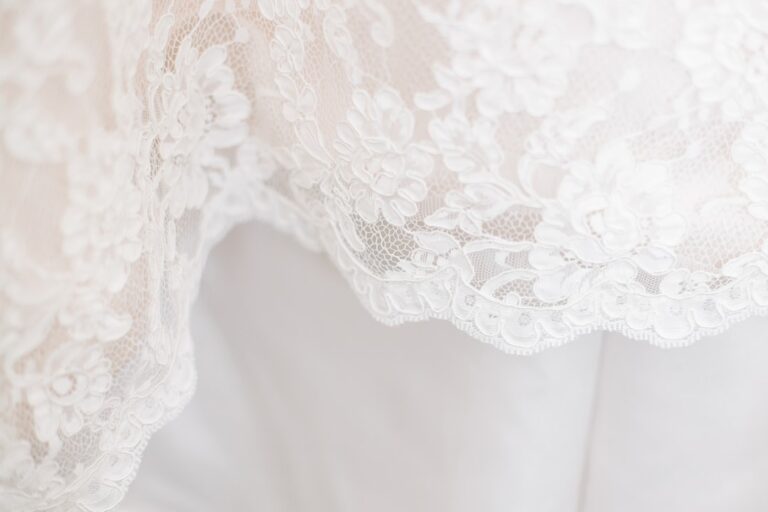
Texture matters as much as color. A matte silk ribbon reads as understated and modern. A sandwashed silk, with its slightly napped surface, reads as soft and old-fashioned. A raw silk ribbon, with its irregular slubs, reads as handmade and intentional. None of these are better; they just do different work. The choice depends on what the dress is doing elsewhere. A gown with lace appliqués, for instance, calls for a smoother ribbon that won’t compete. A gown with no embellishment at all can handle the texture of raw silk, which becomes the only interesting surface in the frame.
The Tying Problem That Ruins Some Weddings
Here is a thing no bridal magazine mentions: a sash comes pre-tied, and a pre-tied bow has no variables. It looks the same at noon as it did at the fitting, which is fine if the goal is consistency. But a silk ribbon belt has to be tied by a human being, and human beings are inconsistent. The bow that looked perfect during the rehearsal might be off-center by a half-inch by the time the ceremony starts. The tails that hung evenly during the first look might twist during the receiving line. The knot itself might loosen over the course of an evening of dancing, requiring a trip to the bathroom to retie it.
Kimberly Ruiz, a wedding coordinator in Austin, Texas, has seen this play out more times than she can count. “The worst one was a bride who had this beautiful, wide silk ribbon—like four inches—and she’d practiced the bow maybe twice. By the time she walked down the aisle, one tail was tucked under the other and the whole thing looked like a collapsed origami project.” Ruiz now includes a retying tutorial in the timeline for any bride using a silk ribbon belt. “I tell them to bring the ribbon to the rehearsal and practice in the actual dress with the actual person who’s going to tie it. Not in a mirror. Not on a mannequin. On their actual body.”
The logistics of retying are not complicated, but they require a specific person to be assigned the job. The bride, understandably, has other priorities. The maid of honor, equally understandably, may not know how to tie a bow that looks intentional rather than accidental. The solution—and this is the kind of granular detail that separates a good wedding from a great one—is to designate someone who is not in the wedding party, who has steady hands, and who has seen the ribbon tied correctly at least once. A mother, a grandmother, a friend who is wearing a dress with pockets. Someone who can step into the bathroom with the bride and have the belt retied in under ninety seconds.
The Knot Itself
The bow used on a silk ribbon belt is not the same as a shoelace bow. It’s a variation called a dressmaker’s bow, or sometimes a ribbon bow, and it involves making two loops, crossing them, pulling one through the center, and then—crucially—tightening the knot horizontally rather than pulling straight down. Pulling straight down distorts the shape of the loops and twists the tails. Pulling horizontally keeps everything flat and even. Most people, left to their own devices, pull straight down. This is why the bow looks wrong at so many weddings.
The tails should be cut at an angle, not straight across, and the cut edge should be sealed with a quick pass over a candle flame or a soldering iron—not with fray-check or any liquid sealant, which stiffens the silk and makes it behave differently. A sealed edge prevents unraveling without altering the ribbon’s drape. It’s a twenty-second procedure that saves a lot of annoyance later.
The Crease That Almost Derailed the Wedding
On the morning of the client’s wedding in May, the ribbon belt was packed in a garment bag with the dress, exactly as Diane had instructed. The plan was straightforward: dress on, belt tied, ceremony, photos, reception, done. What actually happened was that the ribbon, which had been stored flat in a drawer for three weeks, had developed a crease in the middle from being folded. Not a sharp fold—the kind that happens when silk sits in the same position for too long and decides to remember it.
The client’s mother noticed it first, during the getting-ready photos. “There’s a line,” she said, pointing. The photographer, who had been shooting detail shots of the shoes, looked up and said nothing. The client looked down at the ribbon and felt the kind of low-grade panic that doesn’t show on a face but tightens the shoulders. The wedding was in two hours. The ribbon was creased. The backup plan was nothing.
Diane’s shop was closed, it being a Saturday, and the client’s mother had already tried calling her cell phone. No answer. The mother then did something that saved the morning: she took the ribbon into the hotel bathroom, ran the shower on hot for five minutes to steam up the room, and hung the ribbon over the shower rod for fifteen minutes, not touching it. The steam relaxed the silk. The crease softened. By the time the ribbon came out, it was usable. Not perfect—close examination would still show a faint ghost of the line—but from six feet away, invisible.
“I didn’t know you could do that,” the client said later, at the reception. “I didn’t either,” her mother said. “I just thought, silk is natural fiber, heat and moisture, maybe.” It worked, but it was luck as much as knowledge—a combination of a bad decision about storage and a good guess about how to fix it. The ribbon belt, tied correctly by a bridesmaid who had practiced twice the night before, stayed in place through dinner and dancing. The tail did twist once, during the first dance, and was straightened in under thirty seconds by the designated ribbon person, who happened to be the client’s aunt.
What Happens to the Ribbon After the Reception
The most interesting thing about a silk ribbon belt, in the end, is not how it looks on the wedding day. It’s what happens afterward. A sash, made of satin with interfacing and a sewn-in bow, is essentially a single-use object. It cannot be repurposed without deconstruction. It cannot be worn with anything else because its shape is determined by the dress it was made for. It lives in a box, or it doesn’t.
Silk ribbon, by contrast, survives the wedding. It can be washed by hand, pressed, and repurposed. Some brides have their ribbons shortened and turned into hair accessories for anniversaries. Some have them sewn into the lining of a future child’s baptism gown. Some just keep them in a drawer and take them out on the rare occasion they wear something that needs a quiet, lovely line at the waist. Liao has heard from clients who, years later, ask for a second ribbon—a different color, a different width—to replace the one they wore on the day. “They don’t want another sash,” she says. “They want another ribbon. There’s something about the material that doesn’t feel like a costume piece.”
Whether any of this changes how a given bride plans her wardrobe is a question best answered by the person standing in the fitting room, looking at herself in a dress she hasn’t decided on yet. But it’s worth knowing the option exists before the satin sash gets handed over and the pins go in. The ribbon belt is not for everyone. It is, however, for more people than the industry assumes. And it does not require a special occasion to be useful.
📷 Photos: Tom Pumford (Unsplash), Marina Nazina (Unsplash)