How to Understand Why a Japanese Bride Once Wore Two Different Kimonos at Her Own Wedding
This isn’t about fashion. Not really. It’s about magic — specifically, the kind of magic that happens when a bride changes clothes in the middle of her own wedding and, in doing so, changes everything about who she is perceived to be.
The two-kimono tradition in rural Japan — iro-naoshi, or color-changing, layered over a deeper practice called kakeshita and uchikake — isn’t a matter of a quick outfit change for convenience. It’s a ritual with rules, with meaning, and with specific logistics that anyone planning a wedding with cultural substance should understand before they start shopping for silk.
1. Start with the first kimono: the shiro-muku. Pure white. Every thread. White obi, white obi-jime cord, white koshi-himo ties. This isn’t the white of a Western gown, which signals virginity or purity in a Christian context. The white of shiro-muku carries a different weight entirely. It represents the bride’s willingness to be dyed in the colors of her husband’s family — to take on their patterns, their crests, their expectations. It is, in a very real sense, the last time she appears as herself. The shiro-muku is usually a furisode, the formal long-sleeved kimono worn by unmarried women, and its sleeves hang nearly to the floor. The weight of it, the restriction of movement, the way it forces the bride to take smaller, more deliberate steps — all of it is intentional. In rural ceremonies held in family shrines or converted farmhouses, the shiro-muku is often rented rather than purchased, because it will only be worn once. Rental prices for a quality set in a prefecture like Niigata or Yamagata typically run between ¥150,000 and ¥300,000 — a significant sum for a garment that will be removed within hours.
2. Understand the timing. The change doesn’t happen mid-reception, as many assume. It happens during a specific pause in the ceremony, often after the san-san-kudo (the three-three-nine exchange of sake cups) but before the formal toast. This is when the bride disappears — sometimes for forty-five minutes, sometimes for over an hour — while the guests wait. The silence in the room during this interval is notable. No music plays. No announcements are made. The groom stands with his family, making small talk that never quite lands. In a ceremony observed in a minka (traditional farmhouse) outside Takayama, the bride’s mother stood near the sliding fusuma door the entire time, one hand resting on the frame, as if keeping watch. The wait isn’t empty. It has tension.
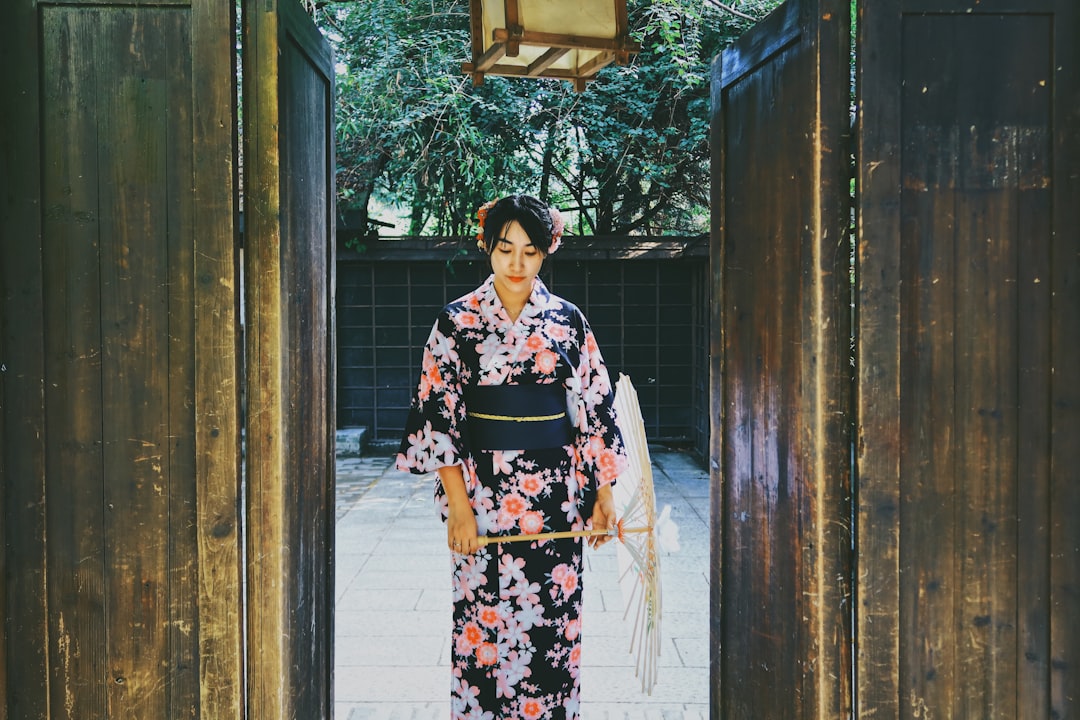
3. This is where the second kimono — the iro-uchikake — enters. The uchikake is a completely different garment. It’s worn open over the shiro-muku, not as a replacement, but as a second skin. It’s heavily embroidered, often in gold and silver thread, with cranes, pine branches, plum blossoms — motifs that symbolize longevity, resilience, and good fortune. The uchikake is padded at the hem, weighted so it trails behind the bride like a slow tide. In rural regions, the uchikake is frequently a family heirloom. A bride in the Tohoku region might wear an uchikake that her grandmother wore, that her great-grandmother wore, the silk yellowed at the folds, the embroidery still sharp. That weight is literal — an authentic silk uchikake can weigh between eight and twelve kilograms. Walking in one requires a specific gait: small steps, hips still, the upper body moving as a single unit. Brides in rural ceremonies often practice this walk for weeks beforehand, pacing the length of their childhood homes in borrowed zori sandals.
4. The practical logistics of the change are rarely discussed but crucial to understand if you’re planning such a ceremony. The shiro-muku is not simply taken off. It is untied, unwrapped, and lifted away by a team — usually the bride’s mother, a hired kitsuke stylist, and sometimes a grandmother or aunt. The obi knots on a formal kimono are complex, tied in specific shapes that require two people to undo. There is a particular sound when the obi-jime cord is pulled free — a soft shhht, like a breath released. The uchikake is then laid over the shiro-muku, not buttoned or zipped, but arranged. The collar is aligned. The hem is adjusted. The bride turns once, slowly, while the stylist checks the fall of the fabric. A kimono fitting during a ceremony is not a private moment. It happens behind a screen, yes, but the screen is often paper-thin, and sounds carry. Guests hear the rustle of silk, the murmured directions, the occasional laugh.
5. There is a variation of this tradition that few outside Japan know about. In some rural areas — particularly in the mountainous regions of Gifu and Nagano — the bride wears not two kimonos but three. The third is a hōmongi, a semi-formal kimono worn for the reception after the uchikake has been removed. This creates a progression: white (a blank canvas), embroidered (a declaration of family history), then patterned but restrained (a return to the everyday, but changed). The logistics of a three-kimono ceremony are formidable. Rental costs can exceed ¥500,000. The bride needs three different obi, three different sets of obi-age and obi-jime, three different zori. The hair is restyled each time. The makeup is touched up. The whole process can take six to eight hours from start to finish. In a ceremony in a village near Matsumoto, the bride changed for the third time in a small room off the main hall, the window open to let in the cold mountain air — a dusting of snow on the sill.
6. The cost of all this is not trivial. A single high-quality uchikake rental in Tokyo’s bridal district can run ¥250,000 to ¥450,000. In the countryside, prices are lower but availability is narrower — a bride in Shimane might have to travel two hours to a rental shop that carries uchikake in her family’s specific crest pattern. The shiro-muku rental adds another ¥150,000 to ¥200,000. Hair and makeup for the change — a separate stylist, often traveling from the nearest city — adds ¥50,000 to ¥80,000. The total for a two-kimono ceremony, not including the groom’s montsuki kimono or the family’s attire, lands somewhere around five hundred thousand to eight hundred thousand yen. For comparison, a single Western-style wedding dress rental in Japan averages ¥200,000 to ¥400,000. The two-kimono ceremony is not a budget option. It is a statement of commitment — to tradition, to family, to the labor of transformation itself.
7. But there’s a quieter layer beneath the cost and the logistics. The two-kimono tradition is, at its core, about the bride’s agency within a ritual that appears to be about submission. The shiro-muku is given to her by her family. The uchikake is often chosen by her. In private consultations with the rental shop, she selects the colors, the embroidery pattern, the weight of the silk. She decides whether to incorporate her own family’s crest or her husband’s. She decides how long the sleeves will be, how far the train will extend. In the rural wedding observed near Takayama, the bride had chosen an uchikake embroidered with yatsude leaves — a motif associated with protection and safe childbirth — despite her mother-in-law’s preference for cranes. The negotiation had taken three weeks. The bride won. The uchikake she wore that afternoon was not a symbol of her new family’s expectations. It was a declaration of her own.
8. For anyone considering incorporating this tradition into their own wedding, the advice is straightforward. Start the rental process six months in advance. Rural shops have limited inventory, and popular uchikake are booked out during wedding season — April to June and October to November. Request a fitting in person, not by video call. The way silk falls on a hanger is not the way it falls on a body. Bring the person who will help with the change — mother, sister, friend — to the fitting. They need to practice the knots. They need to know where the obi pins go. They need to hear the sound the cord makes when it’s pulled free. And let the guests wait. That silence in the room, that pause where nothing happens except the rustle of fabric behind a paper screen — that’s not dead time. That’s the ceremony’s real center.

📷 Photos: Jason Sung (Unsplash), note thanun (Unsplash)