How to Find the Last Traditional Glassblowers in Murano for a Wedding Week Celebration That Actually Feels Like Discovery
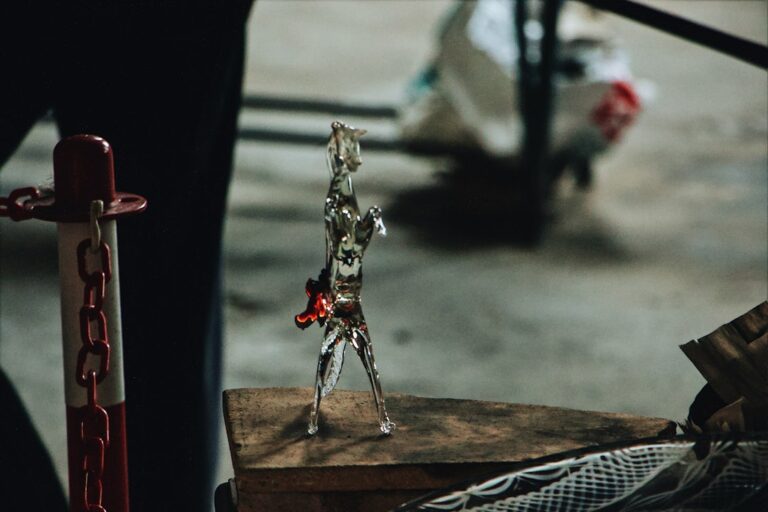
1. Start by understanding the landscape as it is now, not as the postcards remember it. Murano is a fifteen-minute vaporetto ride from Venice’s Fondamente Nove, and the island has spent decades selling its own mythology back to tourists. The factory showrooms along the Fondamenta dei Vetrai are polished, well-lit, and staffed by people who speak four languages and offer free shipping. These are not the places to find the last traditional glassblowers. These are the places to buy a glass horse or a chandelier at a price that includes the commission of the person who brought you through the door. The real operation is elsewhere — smaller, hotter, and more fragile in every sense.
2. The distinction between a glass factory and a glass furnace matters more than most visitors realize. A factory is a commercial space where demonstrations happen on a schedule, where the blower works under a skylight for maximum visibility, where the final product is already priced and waiting in a display case. A furnace — *fornace* in Venetian — is a working studio where someone is trying to keep a five-hundred-year-old technique alive on margins that barely cover the natural gas bill. The traditional blowers are not trying to entertain. They are trying to finish an order before the batch of molten glass cools, and if a visitor happens to watch from a respectful distance, that is tolerated rather than welcomed. This is the difference between buying a souvenir and witnessing something increasingly rare.
3. Timing the trip correctly changes everything about what is possible. Wedding week celebrations in Venice typically peak between April and October, which is also when Murano sees thirty thousand visitors a day on the worst weekends. A Thursday afternoon in early May is still crowded but manageable. A Tuesday in late October, when the Biennale crowds have thinned and the weather is unpredictable, is genuinely quiet. The furnaces operate year-round, but the blowers’ schedules follow the orders, not the tourist calendar. One couple who planned their wedding week around this trip arrived on a Wednesday in November to find a single furnace running and two blowers working silently on a restoration piece for a church in Bologna. They sat on a wooden bench for forty minutes without anyone asking them to leave.
4. Finding the right furnace requires more than a map. The official registry of active glass furnaces on Murano is public but misleading — it lists any workshop with a license, not the ones doing traditional work. The real research happens in three steps, none of which can be done from a hotel lobby in Venice. First, walk past the showrooms on the main canal and look for the side streets where the buildings are older and the signs are handwritten. A furnace with a production line will have a clean entrance. A traditional furnace will have a door that opens directly onto the workshop floor. Second, listen for the sound. A working furnace has a low, continuous hum from the vents, punctuated by the clatter of metal tools on a steel table and the occasional sharp hiss of water hitting a hot pontello. If the only sound is a sales pitch, keep walking. Third, look at the glass itself. Traditional Murano glass has a slight asymmetry that comes from being worked by hand under gravity. Mass-produced pieces are too perfect.
5. The practical details of a visit are straightforward but non-negotiable. Most furnaces open around nine in the morning, close for lunch between one and two, and finish the workday by six. The traditional blowers take longer breaks because the physical toll of the work is real — standing six feet from a furnace that runs at eleven hundred degrees Celsius for eight hours a day leaves a person dehydrated and exhausted in ways a desk job does not. Do not arrive at noon expecting a warm welcome. Do not arrive at four in the afternoon expecting anyone to stop work to explain the process. The moment to arrive is between nine and ten in the morning, when the day’s batch of glass has just been heated and the blowers are in the first rhythm of the work, still fresh enough to answer a single question without losing focus on the piece in their hands.
6. The interaction itself follows rules that are not posted anywhere. Do not touch the glass. Do not stand between the blower and the furnace. Do not take photographs without asking first, and accept the answer if it is no. The blowers who are willing to talk will ask where a couple is from, how they heard about the furnace, whether they know anything about Venetian glass. One blower, a man who had been working on the island since he was fourteen, told a visiting couple that the best question anyone had ever asked him was what color he would mix if he could use any pigment in the world. He answered the question himself — a green that no longer exists because the lead-based formula was banned in the 1990s, or something like that — and then returned to his work without another word. The couple later paid three hundred euros for a small blue bowl he had made that morning, which is less than half what a similar piece would cost in a gallery but more than enough to cover a week of groceries.
7. The cost of a private demonstration is negotiable but has a floor. Most traditional furnaces will not do a demonstration for fewer than four or five hundred euros, and that price assumes a small group, a short session, and no interruptions to the day’s actual production. The alternative is to book through one of the smaller cultural associations on the island — *Associazione Promovetro* runs occasional workshop visits, but the schedule is irregular and the slots fill weeks in advance. A better strategy is to find a furnace whose work a couple genuinely admires, contact them directly by phone (email is often ignored), and offer a price that respects the time. Seven hundred euros for a one-hour session with two blowers is a fair offer. A thousand euros is generous. Anything below four hundred will likely be refused, not out of rudeness but because the time taken for a demonstration means a piece of work is delayed or lost.
8. The wedding week application is where the trip justifies itself differently than a standard souvenir hunt. A traditional glassblower can make a custom piece for the couple — a set of drinking glasses for the rehearsal dinner, a single blown vase for the centerpiece of the ceremony table, a pair of small figures to serve as unity symbols during the vows. The lead time for custom work is usually six to eight weeks, so the order must be placed well before the trip, not during it. One couple commissioned two blown-glass hearts that were exchanged during the ceremony, then displayed on a shelf in their apartment for years afterward. The blower who made them asked only that the couple send a photograph of the hearts in place, so he could see his work in a setting that was not the workshop floor.
9. The friction point that few articles mention is the heat. A furnace studio in summer is genuinely unpleasant — temperatures inside the workshop regularly exceed forty degrees Celsius, and the humidity from the canals makes the air heavy. A couple who visited in July found the conditions so intense that they could only stay inside for twelve minutes before stepping back out into the relative cool of the alley. The blower did not seem to notice. He was in his element, sweat rolling down his arms, his face calm. The experience was authentic but not comfortable. No one goes to a furnace for air conditioning.
10. Traditional Murano glass is fragile in the literal sense — a drop from waist height is usually fatal — but its real fragility is cultural. The number of master glassblowers under forty on the island is small, and shrinking. The furnaces that are still running do so because a handful of people in their sixties and seventies decided not to retire. A couple who finds one of these blowers and commissions a piece for their wedding week has done something that is becoming harder to do each year. The piece itself will sit on a shelf or a table for decades, and every time someone asks about it, the story will begin the same way: there was this man on Murano, working alone in a room that was hotter than anything you have ever felt, and he made this with his hands.

📷 Photos: Anton Lammert (Unsplash), Brett Wharton (Unsplash)