How to Design a Guest Book That Guests Actually Want to Sign
How to Design a Guest Book That Guests Actually Want to Sign
The standard guest book has a predictable lifespan. It sits on a table near the entrance, next to a cup of pens that will be missing two of its four by the ceremony’s start. By the reception, it’s been bumped behind a centerpiece. By the end of the night, maybe a dozen names are scattered across the first three pages, with one aunt’s elaborate note about the “happy couple” taking up a full page and a half. Then it goes into a box.
The impulse to collect signatures isn’t wrong. The container for them usually is. A wedding in Kyoto’s Higashiyama district last October made this clear in a way that a standard blank-paged book never could.
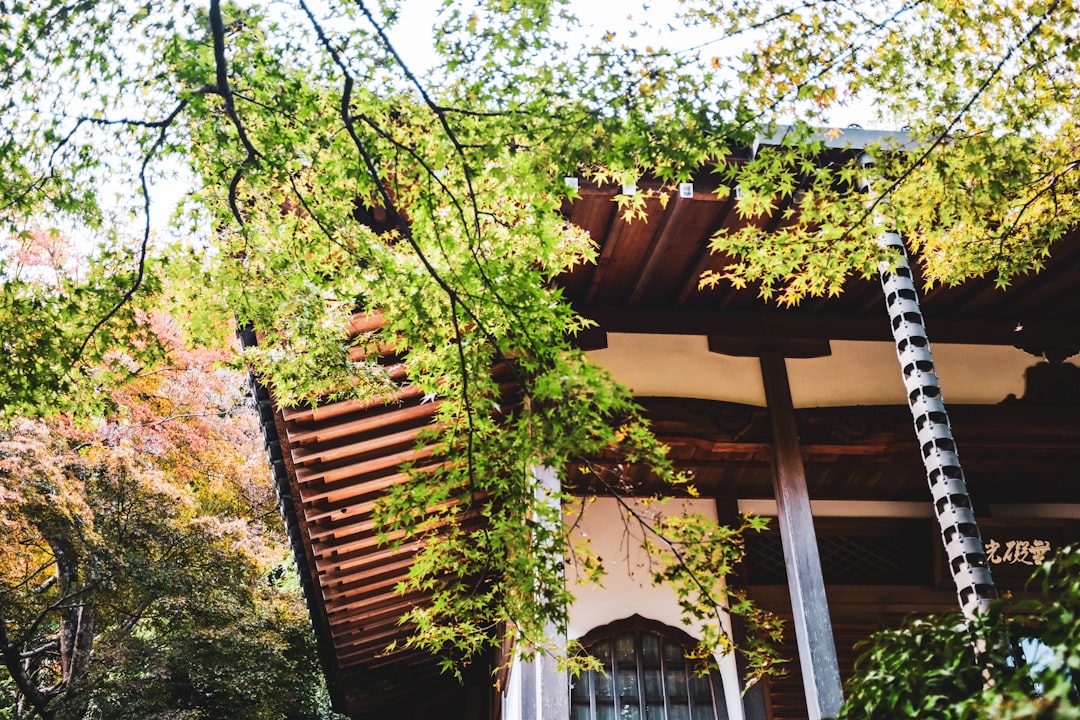
The ceremony took place at a small private tea house called Kōrin-an, tucked behind a bamboo grove on a street most taxis don’t know exists. Twelve guests attended the ceremony itself, with another thirty arriving for the evening reception at a nearby restaurant. The bride had spent six months planning a guest book alternative that involved a scroll of handmade washi paper, a single brush, and a pot of black sumi ink. She’d bought the scroll from a paper shop near the Philosopher’s Path, paying ¥8,400 for a roll that was roughly the length of a person’s arm span.
The logistical annoyance came early. The ink pot, left on a low table near the tea house’s window, was knocked over by a gust of wind ten minutes before the first guest arrived. The ink spread across the tatami in a way that couldn’t be mopped — it had to be blotted, carefully, with a damp cloth, then blotted again. The bride’s mother handled it while the groom held the scroll out of the way. The incident cost roughly thirty minutes of setup time and a small stain near the base of the table leg that the tea house owner later said would fade after three months of sunlight.
But the accident reshaped the plan. What was meant to be a formal calligraphy station became something looser. Guests were told to write whatever they wanted — a character, a word, a phrase, a small drawing — with no pressure to produce something polished. The brush was forgiving. The ink, once it dried, left a slightly raised texture on the paper that caught the light differently depending on the angle.
By the end of the night, the scroll held not just names but a dozen small drawings, a haiku about autumn leaves, a shopping list someone wrote as a joke, and a single line from a guest who’d had too much sake: “This is the best thing I’ve written all year.”
The scroll now hangs in the couple’s apartment in a simple wooden frame, mounted on a wall above their dining table. Visitors ask about it. Nobody asks about the blank guest book from the other wedding they attended last season.
Why the Standard Book Fails
The problem isn’t the concept. It’s the format. A bound book asks for linear participation — start at the front, move to the back, fill each page in order. Most guests don’t want to flip past what others have written to find an empty space. They don’t want to write a full paragraph. They want to leave a mark and go back to their drink.
The logistical issues compound. Pens get lost. Pages get stuck together. The book itself ends up on a table that also holds a card box, a seating chart, and someone’s half-empty champagne flute. The result is that the guest book becomes a prop — something the couple feels good about having but that nobody actually uses.
A scroll format solves several of these problems at once. There’s no page order. Guests unroll a section, write, roll it back. The brush stays where it is. The ink pot, once it’s secured properly after the first incident, doesn’t move. The scroll unrolls horizontally along a table, so multiple guests can work at different sections simultaneously. The handwriting varies wildly, but the visual effect is cohesive — one long surface, filled in layers, rather than a series of disconnected pages.
The trade-off is practical. A scroll requires a longer table, or a surface that’s at least the length of the scroll itself. It requires the ink to stay wet long enough for guests to write but not so long that it smears when rolled. It requires at least one person to be responsible for the roll and unroll process, which the bride in Kyoto delegated to a cousin who had steady hands and no interest in dancing.
Kōrin-an and the Light Through the Shoji
Not every wedding venue lends itself to a scroll. A beach wedding in Thailand, where sand and humidity are constant factors, would turn wet ink into a liability. An outdoor ceremony in Tuscany in August would dry the brush before it touched paper. The setting dictates the material choices, not the other way around.
For the Kyoto wedding, the controlled indoor environment of the tea house was ideal. The tatami absorbed sound and foot traffic. The low tables kept the scroll at a comfortable writing height. The natural afternoon light through the shoji screens illuminated the work surface without glare. None of these conditions were accidental — the bride had visited the tea house three times before selecting it, each time at a different hour, to see how the light and atmosphere changed.
For a location that doesn’t offer those conditions, the alternatives scale down. A single sheet of thick cotton paper, passed around on a clipboard, works in a setting where a scroll would be impractical. A set of loose cards collected in a wooden box gives guests the freedom to write at their own pace without a deadline. One couple used a collection of vintage handkerchiefs, each guest writing in fabric marker, later sewn together into a quilt. Another used a repurposed surfboard at a beach wedding in Malibu, the signatures later clear-coated and mounted on a wall.
The principle is the same regardless of format: the container should match the constraints of the space, not the Pinterest board.
¥8,400 for Paper, ¥15,000 for the Frame
The scroll from the Kyoto shop cost ¥8,400. The ink pot and brush together were ¥3,200. The wooden frame for mounting, purchased later at a framing shop near Shibuya, cost ¥15,000. Total investment: roughly ¥26,600, or about $180 at the time.
A standard guest book from a wedding supplier runs between $40 and $100. A leather-bound option from a boutique stationer sits around $150. The cost isn’t dramatically different. The difference is in what the couple ends up with afterward.
The scroll took up no storage space before the wedding. It could be carried in a tote bag. The alternative — a hardcover book that sits on a coffee table and gets opened twice in the first year — occupies shelf space while gathering dust. The scroll, mounted as art, becomes part of the home’s visual landscape. Guests who see it later recognize their own marks. It prompts conversation in a way that a closed book doesn’t.
The mistake that cost extra time, not money, happened during the framing. The couple initially took the scroll to a large chain framing store in Tokyo, where the staff quoted ¥28,000 and a two-week turnaround. A small specialty framer near their apartment quoted ¥15,000 and did the work in three days. The difference came down to asking the right question: not “how much,” but “have you framed a scroll before.”
Wooden Tiles in Ubud, Pens in a Cooler
Hot, humid, or outdoor settings require a different approach. The scroll method works indoors, in temperate or cool weather, with a stable surface. Anything outside those parameters needs adjustment.
In Southeast Asian destinations, where the air carries moisture year-round, paper-based options curl. One couple who married at a resort in Ubud used a collection of small wooden tiles instead — each guest wrote with a paint pen, and the tiles were later arranged into a mosaic and framed. The tiles cost about 80 cents each from a local craft supplier. The frame added another $30. The total for thirty tiles was roughly $55.
For desert weddings in Arizona or Morocco, where dry heat accelerates ink drying, the concern is the opposite. Pens dry out before guests finish writing. The solution in that case is to supply multiple pens and test them beforehand. One couple brought a dozen pens and lost half of them to the heat before the ceremony began. The backup box of pens, stored in a cooler with the drinks, saved the guest book.
The principle across all climates is testing the materials in advance — not at home, but in the actual conditions of the day. The same ink that flows perfectly in an air-conditioned hotel room will behave differently on a rooftop in late afternoon sun.
“Write Something You’d Want to See Again in Ten Years”
Guests need a prompt, not instructions. A sign that says “Please sign our guest book” gets a signature. A sign that says “Leave us a word, a drawing, a recipe, a joke, a prediction” gets something memorable.
The Kyoto wedding had no sign at all. The cousin managing the scroll simply told each guest: “Write something you’d want to see again in ten years.” That single phrase produced more genuine responses than any instruction about “wishes for the happy couple” ever could.
Timing matters for when guests approach the book. Early arrivals tend to write formal, careful notes. Late arrivals, after a few drinks, leave looser, more personal marks. Both are valuable for different reasons. The trick is not to force the timeline — the scroll should be accessible throughout the event, not scheduled into a specific window. One guest wrote her note at 11 p.m., just before the reception ended, and it turned out to be the most honest line on the entire scroll: “I came here not knowing what to expect. I’m leaving wishing I’d stayed longer.”
The practical takeaway: station the guest book somewhere visible but not in the direct flow of traffic. Near the bar, but not on the bar. Near the exit, but not blocking the exit. The sweet spot is a place people pass naturally, not a place they have to seek out.
The Frame That Shows the Shopping List
The most common fate for a guest book is storage. A box. A shelf. A closet. The couple looks at it once, maybe twice, then it becomes part of the background of their home — seen but not looked at.
A scroll that’s mounted and displayed avoids this fate. But mounting requires decisions: what to include, how much negative space to leave, whether to trim the edges. The Kyoto scroll was framed with all its visible marks — including the blank sections, the shaky handwriting, the shopping list. Nothing was edited out. The imperfection was part of the record.
For the loose-card alternative, a similar principle applies. One couple framed a selection of twelve cards in a grid, rotating the cards each year. Another used a binder with clear sleeves, adding the cards in chronological order by the time they were written — the first guest, who wrote during the rehearsal dinner, shared a page with the last guest, who wrote during the after-party.
The question to ask before choosing a format isn’t “what looks good on the day.” It’s “what will I want to look at in five years.” The answer is almost never a formal, bound, pristine book. It’s the thing that shows wear, the thing with the ink stain, the thing that a guest once wrote on and then immediately regretted, because that’s the thing that actually happened.
📷 Photos: Jo Sorgenfri (Unsplash), PJH (Unsplash), Jo Sorgenfri (Unsplash)