The Dress That Wouldn’t Hold Still
The Dress That Wouldn’t Hold Still
It was the second week of August in a small studio above a fabric district in downtown Los Angeles, and a sample gown was refusing to behave. The problem wasn’t the cut or the fit — it was the fabric itself, a heavy textured linen that buckled under the iron in a way satin never would have. The seamstress, an older woman named Rosa who had been making wedding dresses since the early 2000s, set the iron down and looked at the dress the way someone looks at a stubborn animal that refuses to be led.
“You can’t press this stuff like you press satin,” she said, picking at a crease that had formed along the seam. “It doesn’t want to be smooth. That’s the whole point.”
The dress belonged to a bride named Julia, a 29-year-old architect who had come to Los Angeles from Portland specifically because she couldn’t find what she wanted in the bridal shops closer to home. She had spent six months scrolling through satin columns and crepe sheath dresses before realizing she didn’t want to look like everyone else’s wedding. She wanted something that looked like it had been lived in before she ever put it on.
Julia is not alone. Across the country, brides are quietly walking away from the high-shine, heavy-satin gowns that dominated the last decade of bridal fashion and gravitating toward textured fabrics: linen, cotton-rich blends, even raw silk with visible slubs. It’s not a trend that announced itself with a single runway show or a celebrity wedding. It’s been building for a few years, and 2026 is shaping up to be the year it breaks open.
The Satin Monopoly
For most of the 2010s, satin had an almost total lock on the bridal market. It was the default fabric for everything from ball gowns to slip dresses. It photographed well, draped predictably, and signaled “bridal” in an unmistakable way. A bride in satin was a bride — no ambiguity about it.
But that predictability came with costs. Satin is heavy, hot, and unforgiving. It shows every wrinkle, every drop of water, every smudge of makeup. It also tends to look exactly like every other satin dress in the room. By the time the 2023 wedding season hit full swing, many brides had started to notice that their Pinterest boards — filled with textured linen dresses and raw-edge hemlines — looked nothing like the dresses hanging in the storefronts they visited.
“I tried on nine satin gowns in one afternoon,” says a bride named Mira, who got married last October in a linen dress she found at a vintage reseller in Brooklyn. “They all felt the same. They all looked the same in the photos my mom took. I started to feel like I was trying on a uniform, not a dress.”
Mira’s dress cost $420, a price that includes a small tear in the lining that she says she doesn’t mind. “It’s the kind of thing you’d never see on a new dress, but after five hours of dancing, it didn’t matter. The tear just made it more mine.”
What Texture Actually Means
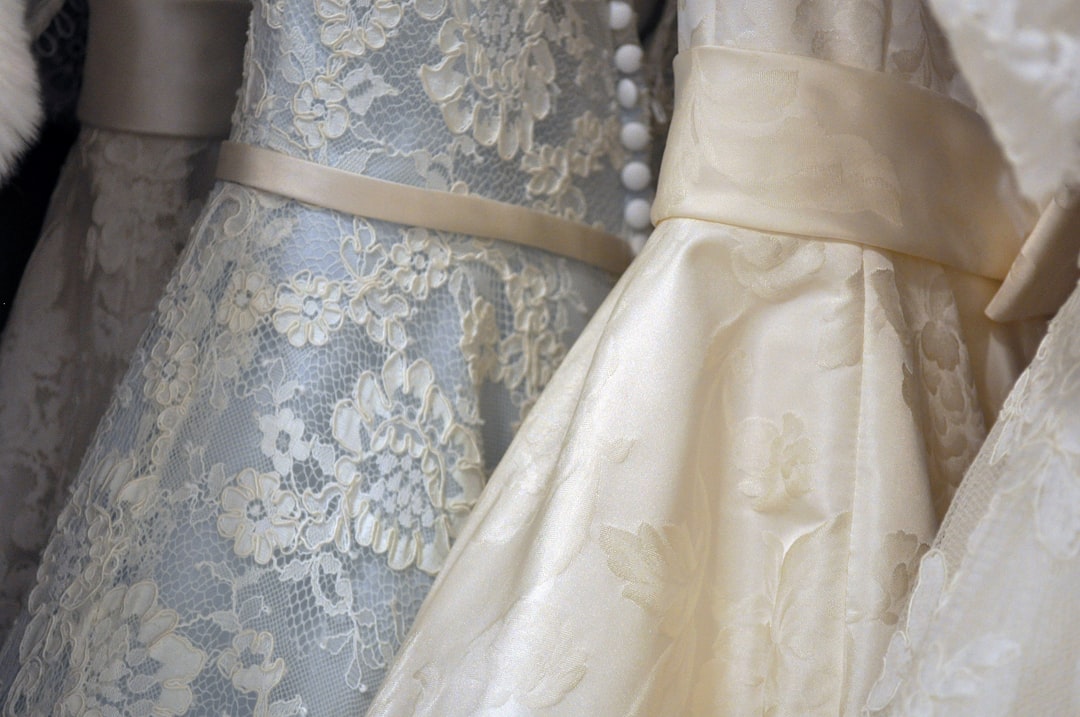
Textured linen and cotton-rich fabrics behave differently from satin in almost every way that matters to a bride. They breathe, for one thing — a detail that becomes significant when the ceremony runs long under an August sun or the dance floor gets crowded by midnight. They also have a natural tendency to move with the body rather than against it, which changes the way a dress feels during the parts of the day that aren’t staged for a camera.
“A bride in linen doesn’t stand the same way a bride in satin does,” says a wedding photographer based in Nashville who has shot about 80 weddings over the past six years. “She sits down more. She leans against things. The fabric doesn’t punish her for being comfortable.”
That comfort has a visual corollary. Textured fabrics reflect light differently than smooth ones, catching shadows and highlights in ways that read as dimensional rather than flat. In photographs, a linen dress has more visual depth than a satin dress under the same lighting conditions — something that matters to a generation of brides who know exactly how their images will be seen and shared.
“I tell brides all the time: if you’re going to spend thousands of dollars on photos, choose a fabric that looks interesting in them,” the photographer says. “Satin looks like a white rectangle in bad light. Linen looks like something.”
The Cotton-Rich Middle Ground
Not every bride is ready to go full linen, and the industry has responded with a middle category: cotton-rich blends that combine the breathability of natural fibers with a structure that holds a shape linen sometimes refuses to maintain. These fabrics are more forgiving than pure linen, less likely to wrinkle in the back of a car, and easier to alter without the dress losing its character.
A designer named Leila, who runs a small bridal atelier in Austin, says she started working with cotton-rich fabrics around 2021 after noticing that her clients were bringing in photos of vintage cotton dresses from the 1970s — not the sleek satin gowns she had been making. “They wanted something that felt softer, more wearable. They kept saying the word ‘touchable.’ I don’t think anyone had ever described a wedding dress to me that way before.”
Leila’s atelier now makes about sixty percent of its gowns in linen or cotton-rich blends. The remaining forty percent is still satin and silk, mostly for brides who want a more traditional look or whose venues expect a certain level of formality. “The satin brides know exactly what they want,” she says. “They’re not confused by what’s happening in the market. They just want different things.”
The cotton-rich gowns typically cost between $1,200 and $2,800, depending on the complexity of the construction and whether the bride wants hand-stitched details. That’s roughly comparable to mid-range satin gowns from the same atelier, though Leila notes that the fabric itself is less expensive — the labor, on the other hand, is sometimes higher because natural fibers require more careful handling.
The Logistics of a Less-Is-More Fabric
Choosing a textured fabric comes with trade-offs that bridal consultants don’t always mention during the first appointment. Linen wrinkles, sometimes badly, and not every venue has a steamer on hand. Cotton-rich blends can shrink if they’re not cleaned correctly. Raw silk sheds loose fibers that can show up on a groom’s dark suit jacket.
“The first time I wore my dress, I had to spend twenty minutes with a handheld steamer in the bridal suite before the ceremony,” says a bride named Elena, who wore a cotton-rich A-line dress at a vineyard wedding in Sonoma last June. “My mom was frantic. She kept saying the wrinkles made it look like I’d slept in it. But that was kind of the look I wanted — not slept-in, but not stiff either.”
Elena’s dress came from a small designer in Los Angeles who specializes in what she calls “unfinished hems” — raw edges that aren’t hemmed at all, so the fabric naturally frays slightly over the course of a long day. “The designer told me not to worry about the fraying,” Elena says. “She said it was part of the design. I thought she was being nice until I got the photos back and saw that the frayed edges caught the light in a way the hemmed ones wouldn’t have.”
That willingness to accept imperfection — or to see it as a feature rather than a flaw — is a defining characteristic of the brides who gravitate toward textured fabrics. They tend to be slightly older, on average, than the satin-buying cohort: late twenties to mid-thirties, often with established careers and a clear sense of what they do and don’t want. They’re also more likely to have attended other people’s weddings and noticed what worked and what didn’t.
“I went to seven weddings in 2023,” says Julia, the architect from Portland. “Every single bride in satin spent the reception either holding her dress up or fixing it. I didn’t want to spend my wedding fighting my clothes.”
The Problem With Clean Edges
One of the less discussed reasons for the shift is the way satin gowns edge toward formal uniformity across price points. A $500 satin dress from a fast-fashion bridal site and a $5,000 satin dress from a high-end designer often look nearly identical in the silhouette category — the difference is in the quality of the boning, the weight of the fabric, and the precision of the construction. Neither one communicates much about the bride who chose it.
Textured fabrics, by contrast, resist that kind of replication. A linen dress reads differently depending on the weave, the weight, and the color. A cotton-rich blend can look completely different in natural light versus candlelight. The same dress worn by two different brides will photograph differently because the fabric responds to movement in ways that satin doesn’t.
“Satin is a statement of intent,” says the Nashville photographer. “Linen is a statement of personality. You can put ten brides in satin and they’ll look like ten versions of the same idea. Put ten brides in linen and you’ll see ten different people.”
That distinction matters in a wedding market that has become increasingly crowded with options. The average bride in 2025 spent about 14 hours shopping for a dress across three to four appointments, according to industry data cited by several bridal consultants interviewed for this article. By the time they reach the final appointment, many brides have seen so many satin gowns that the fabric has stopped registering as a choice and started feeling like a requirement.
A Tuesday Afternoon in a Small Atelier
On a gray Tuesday afternoon in October, a bride named Priya walked into Leila’s atelier in Austin with a photo of a dress she had seen on Instagram — a cotton-rich column with a square neckline and an unhemmed hem. She had been looking at satin gowns for three months and had tried on at least fifteen of them. None had felt right.
“I kept telling my mom that something was off,” Priya says. “She thought I was being picky. But I could feel the difference. The satin dresses felt like costumes. This one felt like a dress I would actually wear.”
The fitting took about an hour. Leila pinned the shoulders, adjusted the length, and noted a few small changes to the side seams. Priya paid a deposit of $600, about a third of the total cost. The dress would be ready in ten weeks, just in time for her February wedding in a converted warehouse downtown.
On the way out, Priya stopped to look at a sample dress hanging on the wall — a linen gown with visible stitching and a slight asymmetry in the skirt. “I almost changed my mind right there,” she says. “But the cotton-rich was the right choice. It’s what I wanted. I just needed to see it on to know.”
She paused.
“I know it sounds silly to spend that much time thinking about fabric. But it’s the one thing you’re wearing all day. It has to feel like you.”
The Practical End of the Conversation
For brides considering textured fabrics, the logistics are worth thinking about ahead of time. Linen and cotton-rich gowns don’t pack the same way satin does — they need to be steamed or ironed before the ceremony, and they won’t hold a crease the way a structured satin gown might. Some brides opt to have their dress steamed at a local dry cleaner the morning of the wedding, a service that typically costs between $25 and $50 and takes about an hour.
Alterations are also slightly different. Natural fibers can be taken in or let out more easily than synthetics, but the raw edges of an unhemmed dress require a different approach — some designers leave the hem intentionally unfinished, while others add a thin binding that preserves the look without the fraying. Brides should ask their designer or tailor how the hem will behave over the course of the day, especially if the wedding involves a long walk, a dance floor, or outdoor elements.
Cleaning is another consideration. Most textured linens and cotton-rich blends are dry-clean only, though some can be hand-washed in cold water with a gentle detergent. The cost of post-wedding cleaning typically runs between $60 and $120, depending on the complexity of the dress and the local rates.
None of these are dealbreakers. But they are the kinds of details that a first-time bride might not know to ask about until it’s too late to adjust. The brides who end up happiest with their textured gowns, according to the consultants and designers interviewed for this article, are the ones who went into the process knowing what they were signing up for — not a dress that would stay perfect all day, but one that would feel like them even when it didn’t.
For anyone considering the switch, the advice from those who have already made it is simple: try the fabric on before you decide. See how it moves in the light. Feel how it sits on your shoulders. If it makes you want to sit down in it — really sit, not just perch on the edge of a chair — that’s probably the one.
📷 Photos: Anna Docking (Unsplash), Brooke Balentine (Unsplash)