Elena’s Arms Were Fine. The Dress Was Another Story.
Elena’s Arms Were Fine. The Dress Was Another Story.
The appointment was for 10 a.m. on a Thursday. That was the first problem, though nobody realized it until later. Elena had booked her bridal spray tan at a place called Bronze & Beyond in a strip mall off the 110 freeway in Los Angeles, three days before the wedding. The woman behind the counter, whose name tag said “Maya,” asked if she’d done a trial run. Elena said no. Maya didn’t push it.
The application itself took forty-five minutes. Elena stood in a small room with a paper shower cap on her head and a pair of sticky-soled slippers. The technician sprayed in long, even passes—back, sides, front, arms. The solution smelled like toasted sugar and something chemical underneath. “Don’t shower for at least eight hours,” the technician said. “Wear loose clothes. No deodorant. No lotion. No sweating.” Elena nodded, paid $85 even, and drove home in a pair of old sweatpants and a T-shirt that was already starting to feel tight.
That night she slept on her back with her arms straight at her sides, the way you sleep after a sunburn when you’re afraid to move. She woke up once, disoriented, and touched her shoulder. Her fingertips came away brown.
The Morning Of
The wedding was a Saturday. Elena had scheduled the tan for Thursday so there’d be a full day in between. That seemed generous. It was not generous.
Friday morning, she showered for the first time since the spray. The water ran beige for the first thirty seconds. When she stepped out, her skin looked even and warm—a shade called “medium olive” on the color chart she’d picked from at the salon. Her face was fine. Her neck was fine. Her arms, from wrist to shoulder, looked like she’d been dipped in ginger tea.
She texted her maid of honor, Claire: Should I be darker on my arms?
Claire responded: No idea. Google it.
Elena googled it. The results were not comforting. Most of them were people saying the same thing: spray tan on the arms is always the first place it wears off, and if your dress has sleeves or hits at the shoulder, the friction plus the fabric plus the sweat equals transfer. White silk, someone wrote in a forum from 2019, was the worst possible fabric for this. “It’s basically a blotter,” the post read. “It will pull the color right off your skin.”
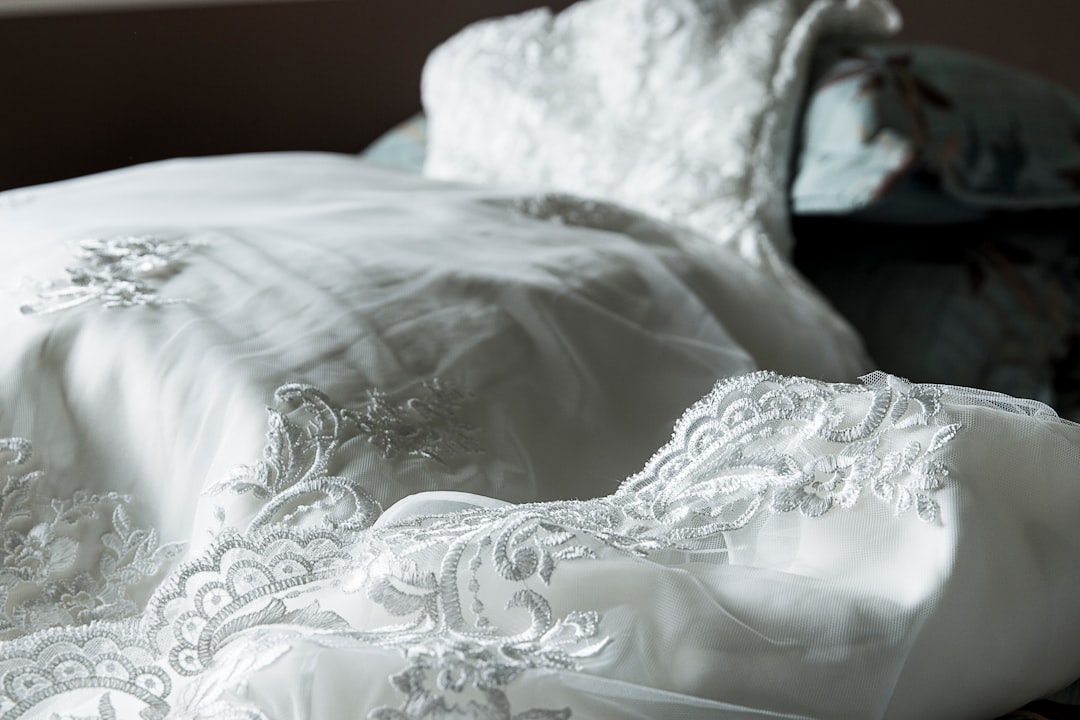
Elena’s dress was white silk. It had a fitted bodice with a high crew neck and three-quarter sleeves that ended just below the elbow. The sleeves were not tight—they were cut generously, almost like a dolman shape—but they were sleeves. The entire length of her inner arm would be touching silk for six to eight hours.
The Dress Rehearsal Nobody Did
She hadn’t tried on the dress after the tan. It was still at the seamstress’s until Wednesday afternoon. She picked it up Thursday at 4 p.m., drove it home, hung it on the back of the bedroom door, and didn’t open the garment bag until Friday morning. By then, the tan had been on for twenty-four hours. It wasn’t going to get darker or set further. What she had was what she had.
She pulled the dress on by herself in the bedroom. The silk was heavier than she remembered. The zipper caught once. When the dress was on, she stood in front of the mirror and lifted her arms to check the fit. Then she put her arms down and looked at the inside of the sleeves.
There was already a faint brown smear on the left sleeve, right where the fabric had pressed against the crook of her elbow while she reached for the zipper.
She stood there for a moment. Then she took the dress off, hung it back up, and called Claire.
What The Internet Didn’t Say
The conventional wisdom about spray tans and wedding dresses is broadly correct: do it three to five days before, exfoliate beforehand, avoid water and friction, sleep in loose clothing. All of that is true. None of it addresses the specific problem of a fitted white silk dress with sleeves worn from 3 p.m. until midnight in October in Los Angeles, where the high that day was 83 degrees and the ceremony was outdoors.
Elena had not considered temperature. She had not considered that silk, which breathes, also holds heat against the skin. She had not considered that the solution on her arms would be warm and slightly damp for hours, even if she didn’t feel it, and that warmth would make the color transfer more easily. She had not considered that the red wine she planned to drink at dinner would stain her lips, and that she’d be touching napkins to her mouth, and that the napkins would also turn brown.
“The arm thing is real,” says Rachel, who works at a bridal alterations shop in Austin and has seen exactly this scenario “six or seven times” in five years. “The bride comes in for the final fitting and we put the dress on and I just see this line of brown inside the sleeve. She hasn’t even worn it yet. It’s already happening.” Rachel tries to tell brides about the sleeve issue during the fitting itself—spray the arm but leave the sleeve area mostly bare, or wear a dress with no sleeves at all, or don’t spray at all—but she says most brides don’t listen. “They want to be tan. They don’t want to think about the dress.”
Elena had listened to nobody. She had not asked her seamstress about the silk and the tan. She had not asked the salon about sleeves. She had not asked anyone who had actually worn a white silk dress with sleeves to a wedding about what happened. She had read two blog posts and looked at a Pinterest board and decided that three days out was enough.
The Thing That Saved Her Was A Mistake
On Friday afternoon, after the smear appeared, Elena drove back to Bronze & Beyond. Maya was at the counter again. Elena showed her the inside of the sleeve in a photo on her phone—the brown streak, clear as a fingerprint. Maya looked at it for a long time.
“Yeah,” she said. “That’s going to happen.”
Maya had been doing spray tans for four years. She said the issue was that Elena’s arms had not been exfoliated enough before the application, and that the solution had pooled in the creases of her elbows. The color there was darker and wetter. It would transfer more. She also said that doing the spray tan on a Thursday for a Saturday wedding was “cutting it close”—two days of wear and tear before the event. She suggested Elena come in for a “touch-up” on the arms the next morning, which would be Saturday, the day of the wedding, three hours before the ceremony.
Elena said yes. This was the mistake that saved her.
The touch-up was $35. Maya sprayed only the arms, from the shoulder down to the wrist, using a lighter solution. She told Elena to wait fifteen minutes before dressing and to use a setting spray, which she sold her for $12. The setting spray was meant to seal the color and reduce transfer. Elena sprayed it on her arms in the parking lot, standing next to her car, and then drove home, holding her arms out in front of her like a zombie.
The Price Of That Decision
The touch-up added thirty-five minutes to her timeline. She had planned to start getting ready at noon. She got home at 1:10 instead. Her hair was scheduled for 1:30 at a salon two miles from the venue, and she arrived with wet hair because she’d run out of time to style it herself. She paid $8 for a cab from the salon to the venue because she didn’t want to drive and risk sweating in the car.
The cab driver’s air conditioning was broken. The inside of the car was 87 degrees according to the dashboard. Elena held her arms away from her body for the entire twelve-minute ride, her hands hovering in the air like she was being robbed. The driver looked at her in the rearview mirror once and said nothing.
The Dress, One Hour Before
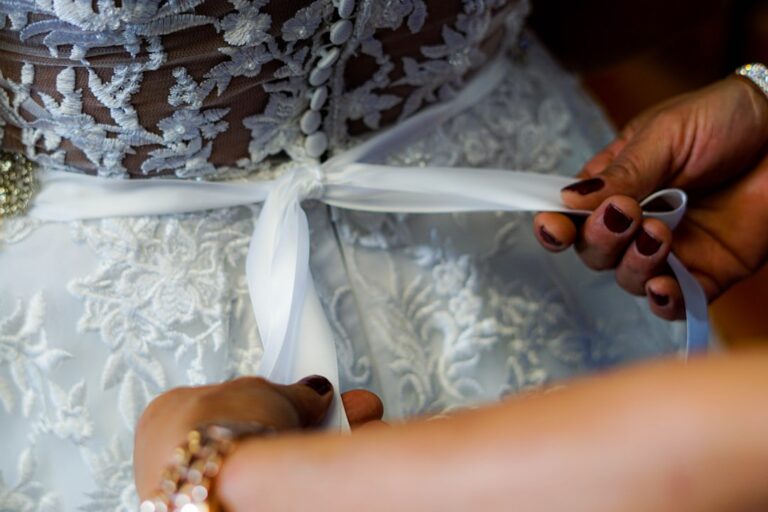
Getting into the dress was a two-person job. Claire came into the bridal suite at the venue—a small room with a mirror and a couch and a bottle of champagne nobody had opened—and helped Elena step into the gown. The silk was cool against her legs. Claire pulled the zipper up. Elena turned to face the mirror.
The arms looked fine. The color was even. No streaks. No dark spots. The setting spray had dried to a matte finish that didn’t feel sticky.
Claire asked if she should check the inside of the sleeves. Elena said no. She didn’t want to know.
Forty-Five Minutes In
The ceremony was short—eighteen minutes, including the vows and the ring exchange and a song played on a guitar. Elena stood under an arch draped with white flowers, her hands clasped in front of her. She did not move her arms. She did not sweat, as far as she could tell. The air was dry and warm, and the silk was hot against her skin, but she held still.
When it was over, she hugged her new husband. He put his hand on her back, between her shoulder blades, and she felt the heat of his palm through the fabric. Then she hugged her mother. Then she hugged Claire. Each time, she held the hug for a beat too long—not out of emotion, but because she was waiting for the inevitable pull of fabric against skin.
After the third hug, she excused herself to the bathroom. Inside the stall, she lifted her left arm and looked at the inside of the sleeve.
There was a faint brown mark, about the size of a quarter, where her mother’s arm had pressed against hers.
She put her arm down and went back to the reception.
What Didn’t Work, What Almost Didn’t Work, And The Cab Ride
The rest of the evening was a managed catastrophe. Elena kept her arms at her sides during dinner. She held her champagne glass with her fingertips, her forearms parallel to the table. She ate a slice of cake with her left hand because her right arm was pressed against her husband’s arm and she didn’t want to compound the transfer. By the end of the night, the inside of her left sleeve had three distinct brown marks. The right sleeve had one. The marks were visible if you looked, but only if you knew where to look. Nobody mentioned them.
The dress went to the dry cleaner the following Tuesday. The cleaner said the marks came out “mostly”—a word that still bothers Elena when she thinks about it. The dress is now in a box under the bed. She hasn’t worn it again.
If she could do it over, she says, she would skip the spray tan entirely. Or she would do it a full week before the wedding and wear a dress with no sleeves. Or she would have done a trial run, two weeks before, with the actual dress. She would have worn it for an hour in the heat, sat in it, stood in it, hugged someone in it, and then looked at the inside of the sleeves. That would have told her everything she needed to know.
She did not do any of those things. She spent $132 on a tan that lasted five days and left marks on a dress she will probably never wear again. She spent an extra twelve minutes in a broken air-conditioned cab holding her arms in the air like an absurdist performance piece. She spent the first hour of her wedding reception checking the inside of her own sleeve in a bathroom stall.
Months later, Elena says the whole thing is funny now. When she tells the story, she gestures with her hands, and she doesn’t hold her arms away from her body anymore. The dress is in the box. The tan is long gone. But walking past a window display of white silk, she still thinks about the brown marks, and she still slows down to look.
📷 Photos: Katy Duclos (Unsplash), Maria Orlova (Unsplash)