Light That Never Dies: Planning a Wedding Under the Midnight Sun in Northern Norway
The first thing to understand about planning a wedding in Northern Norway during the summer solstice is that the sun does not set. It drifts sideways across the sky, dips toward the horizon at maybe 2 a.m., then lifts again without ever fully disappearing. This is not a metaphor. It is a logistical reality that reshapes every decision a couple makes — from the timing of the ceremony to the sleep schedule of the guests — and it is the reason the whole idea works.
Northern Norway, from the Lofoten Islands up through the Lyngen Alps to the North Cape, sits above the Arctic Circle. From mid-May through late July, daylight stretches into something more like a permanent golden hour. The solstice itself, around June 20 or 21, is the longest day of the year. In Tromsø, the sun stays above the horizon for a full 24 hours. In Svalbard, it stays up from April to August. The light is not harsh midday sun; it is low, warm, and soft at all hours, because the sun never climbs to a high angle. Photographers who know this region book their shoots at what would normally be 1 a.m., because the quality of light at that hour is identical to what most of the world gets at 7 p.m.
The White Sand at Haukland and the Boat on the Fjord
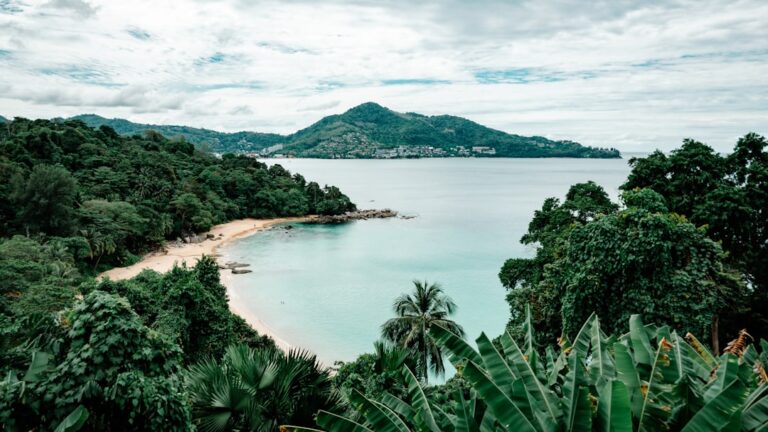
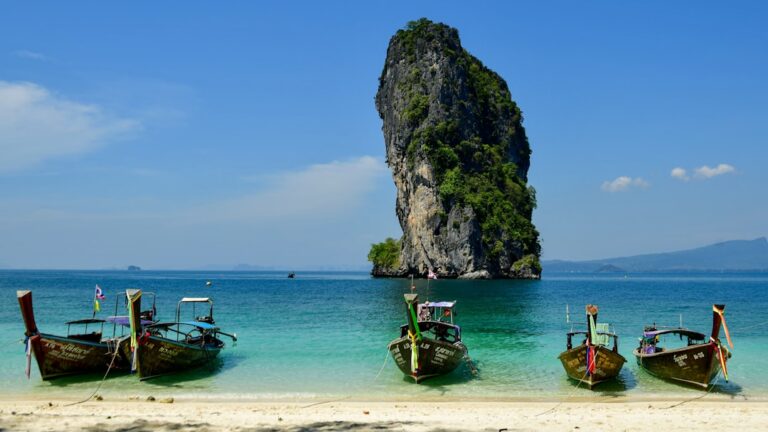
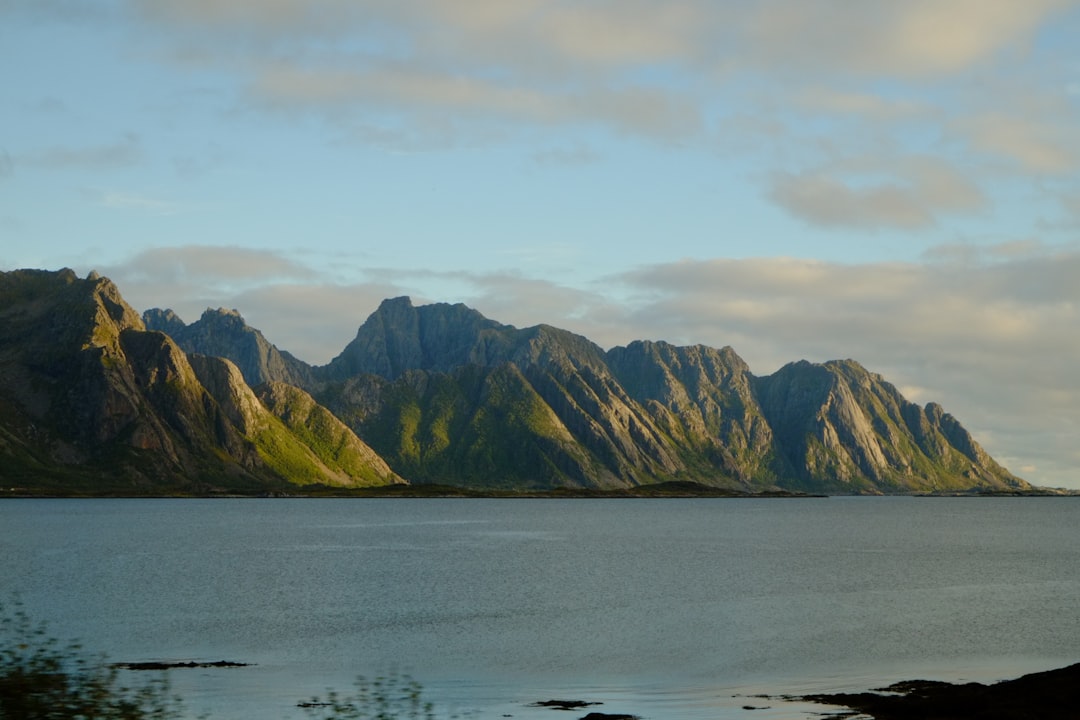
The most photogenic spots — the white sand beach at Haukland Beach in Lofoten, the jagged peaks around Senja, the mountaintop chairlift at Fjellheisen in Tromsø — are also the most popular. A wedding party of 20 to 30 people can work at any of them, but a larger group requires a venue with infrastructure. Private cabins on the Lofoten coastline sleep 12 to 15 and come with kitchens, saunas, and enough parking for a minibus. Some couples book the entire Ramberg Gjestegård in Ramberg, a seaside hotel with a restaurant that handles catering for groups of 40. The alternative is a city-based ceremony in Tromsø, followed by a boat charter out into the fjords for the reception. The boat option solves the accommodation problem — guests sleep in the city — and adds a layer of movement that keeps the energy from flagging across the endless day.
The 10:30 p.m. Vows
Most solstice weddings in this region do not happen at noon. They happen at 9 p.m., or 11 p.m., or 2 a.m. The reason is twofold: the light is at its most dramatic in the late-night hours, and the practical effect is that the ceremony ends just as the “midnight sun” moment arrives. One couple who married on the shore of the Lyngen Fjord began their ceremony at 10:30 p.m., after a three-course dinner. The vows were read under a sky the color of pale honey, and by the time the rings were exchanged, the sun had barely moved. The photographer captured the entire sequence in consistent light, without the harsh shadows that plague daytime ceremonies in lower latitudes. Guests who had been skeptical about a 10 p.m. wedding reported being wide awake, partly because the light tricks the body’s circadian rhythm into thinking it’s still late afternoon. Blackout curtains in the accommodations become essential, and most venues in the region provide them as standard equipment for exactly this reason.
The Tent That Stayed Dry
The summer solstice in Northern Norway averages 10 to 12 degrees Celsius — roughly 50 to 55 degrees Fahrenheit — with rain possible at any moment. The region’s microclimates mean a ceremony planned outdoors can be rained out within ten minutes of setup, then clear again twenty minutes later. Couples who treat the weather as a minor detail rather than a primary planning axis tend to have a worse time. The practical solution is a backup indoor space within a five-minute walk of the outdoor site, not a fifty-minute drive away. The Ramberg Gjestegård, again, keeps its main dining hall available as a rain option for garden ceremonies. Boat charters typically have a heated cabin below deck. One couple who married on the beach at Ersfjordbotn outside Tromsø rented a large canvas tent and had it erected by a local event company the morning of the wedding, with portable heaters on standby. The tent went unused, but the peace of mind was worth the 8,000 Norwegian kroner — roughly 700 euros — that it cost.
Two Flights and a Ferry
Tromsø is roughly a three-hour nonstop flight from Oslo. For guests coming from outside Scandinavia, that means at least two flights and one overnight stop. A wedding in the Lofoten Islands adds a connecting flight from Oslo to Bodø, then a short hop to Leknes or Svolvær, or a ferry crossing that takes three to four hours. Some couples subsidize the travel for immediate family — a common gesture is covering the Oslo-Tromsø leg for parents and siblings — and leave the rest to guests who understand the ask. The result is a smaller wedding, typically 20 to 40 people. That becomes a feature rather than a limitation. The smaller group makes it possible to do things that would be unwieldy with a larger crowd: a post-ceremony boat trip to see puffins on the island of Bleik, a late-night sauna session followed by a plunge into the fjord, a group hike up the mountain at Storsteinen the next morning. Guests at these weddings often report that the travel difficulty itself bonded the group in a way a local wedding never could.
Paperwork First, Then Rings
Norway requires foreign couples to submit a marriage application to the county governor of the region where the ceremony will take place, along with proof of single status, birth certificates, and passport copies. The application must be filed at least two weeks before the wedding date, and the documents need to be translated into Norwegian or English by a certified translator. The most efficient route is to complete the paperwork through the local municipality in Tromsø or Svolvær before arriving. Some couples hire a Norwegian wedding planner to handle the submission on their behalf. The cost runs between 5,000 and 10,000 kroner — around 450 to 900 euros — for the service. Couples who skip this step and attempt to handle it on arrival have reported delays of up to a week, which in a region where flights are infrequent and accommodations are booked months in advance, can unravel the entire plan.
Rubber Boots and Wool Blends
The bride who wore a sleeveless dress and bare feet on Haukland Beach at 11 p.m. in late June spent the ceremony visibly shivering, despite a cashmere wrap. The groom who switched from a wool suit to a lined waterproof jacket before the boat reception stayed comfortable for the full six hours. Local wedding shops in Tromsø carry heavy-weight wool and silk blends designed for the climate, and several Norwegian designers — Holzweiler, Samsøe & Samsøe, the Oslo-based brand Leila Hafzi — offer bridal separates that layer well. The most practical footwear for an outdoor ceremony is a low heel or flat boot with a rubber sole, because the ground is often damp, and traditional wedding shoes will soak through within minutes. One wedding photographer based in Tromsø keeps a pair of knee-high rubber boots in the back of her van for exactly this reason — she’s lent them to three different brides over the past five years.
The Peonies That Never Arrived
A one-week trip to Northern Norway for a wedding party of 30 is not cheap, and the costs that surprise people are rarely the obvious ones. The catering for a plated dinner in Tromsø runs about 1,500 kroner per person — roughly 135 euros — before drinks. A boat charter for an evening reception costs somewhere around 25,000 to 40,000 kroner, depending on the size of the vessel and the duration. Flowers shipped from Oslo cost significantly more than locally grown ones, which are limited to hardy perennials like heather, wild thyme, and miniature roses that survive the short growing season. One couple who married in Lofoten in 2023 reported that their floral budget, originally set at 10,000 kroner, ballooned to 18,000 after the florist explained that peonies, which do not grow above the Arctic Circle, had to be flown in from the Netherlands. The couple chose to forgo peonies entirely and used only local greenery and dried flowers, which cost 8,000 kroner and looked more appropriate to the landscape.
Cloudberries and Brunch at 11 a.m.
The most common complaint from guests at Arctic summer weddings is not the cold or the cost. It is the inability to sleep. After a ceremony that ends at 1 a.m., guests return to their cabins or hotel rooms, pull the blackout curtains closed, and still lie awake because their bodies know it is light outside. The smartest hosts provide sleep masks as a welcome gift, along with a note suggesting that guests set an alarm for a reasonable morning hour rather than relying on natural cues. One couple in Senja scheduled a casual brunch for the day after the wedding at 11 a.m., which allowed guests to sleep late without guilt, then served a spread of cured fish, flatbread, cheese, and cloudberries — something that tastes like a cross between a raspberry and a honeydew melon, or so they say — that refueled the group for the afternoon hike that followed. The brunch cost 350 kroner per person, and was the most appreciated line item in the entire weekend budget.
Months later, people who’ve made the trip tend to say the same thing: the light, the way the sea looks at 2 a.m., the strange quiet of a wedding that happens in what feels like a paused moment. It is not an easy thing to organize, but some things about it — the shivering bride on the sand, the tent that cost 8,000 kroner and stayed dry — don’t quite translate until you’re there.

📷 Photos: Bernhard (Unsplash), Bernhard (Unsplash)