The Reason Navy Blue Velvet Jackets Are Suddenly Outselling Classic Black Tuxedos at Rental Shops This Spring
The Reason Navy Blue Velvet Jackets Are Suddenly Outselling Classic Black Tuxedos at Rental Shops This Spring
You’ve been scrolling through Pinterest, flipping through bridal magazines, and maybe even watching a few too many wedding scenes in movies. And every time, the groom’s outfit seems to fall into one of two categories: a classic black tuxedo or a simple dark suit. But this spring, something unexpected is happening at rental shops across the country. The navy blue velvet jacket—rich, textured, and surprisingly versatile—is quietly overtaking the black tuxedo as the most requested item at the counter. What’s behind this shift, and more importantly, should you consider it for your own big day?
“We’ve seen a dramatic pivot,” says Marcus Delacroix, a menswear stylist and wedding fashion consultant. “Black tuxedos have been the default for decades, but this spring, couples are coming in asking for something with more personality and warmth. Navy blue velvet is that answer. It feels both formal and approachable, which is a powerful combination for a wedding.”
How the Light Catches the Nap
Texture Over Tradition
At first glance, a black tuxedo might seem like the safest bet. But safe doesn’t always mean memorable. The navy blue velvet jacket offers a tactile richness that flat black fabric simply can’t match. When you walk into your reception, the light will catch the velvet’s nap, creating a subtle, shifting depth that photographs beautifully—especially under candlelight or warm uplighting.
“Velvet has this incredible ability to feel both luxurious and relaxed at the same time,” explains Delacroix. “A black tuxedo can sometimes come across as a costume—like you’re playing dress-up for a black-tie event. But navy velvet says, ‘I put thought into this. I chose something that reflects who I am.'”
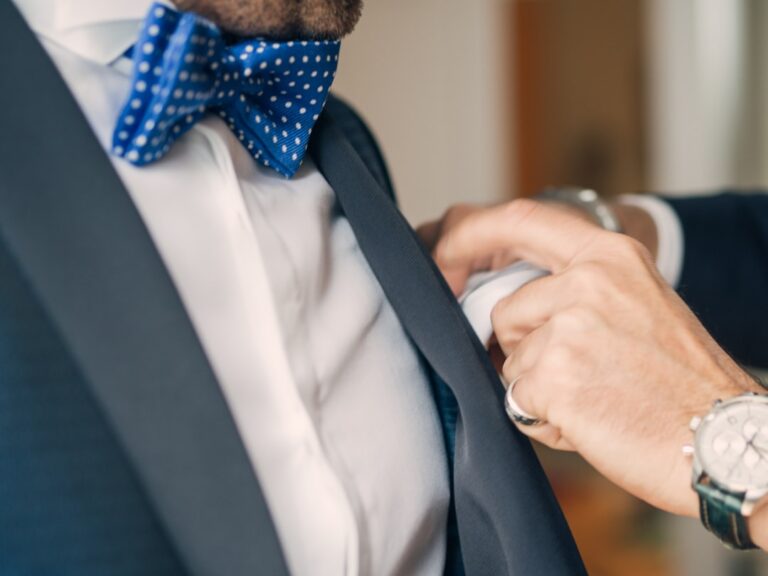
Navy is also a remarkably forgiving color. It complements nearly every skin tone, works with a wide range of bridal party colors, and doesn’t compete with floral arrangements or decor. And because the fabric is inherently soft and plush, it can look just as polished with a crisp white shirt and bow tie as it does with a more relaxed open-collar look.
A Spring Garden Wedding, a Poly-Viscose Blend
While velvet has historically been associated with winter weddings, today’s lightweight blends make it a viable choice for spring and even early fall celebrations. The key is choosing the right weight and weave. Many rental shops now carry velvet jackets with a cotton or linen blend that breathes better than traditional velvet, so you don’t end up sweating through your first dance.
“You’ll want to ask your rental shop about the fabric composition,” says Priya Sharma, a bridal and event stylist. “A pure silk velvet is gorgeous for an evening in October, but for a spring garden wedding, you’ll want something with a bit of stretch and breathability. Many of the best options are actually poly-viscose blends that mimic the look of velvet without the weight.”
Also consider your venue. A navy velvet jacket looks stunning against industrial brick, rustic barn wood, or a coastal backdrop. It even works in a ballroom, especially if you’re leaning into a jewel-tone or moody color palette. If your wedding is during the day or outdoors, you can easily pair the jacket with light-colored trousers (cream, beige, or even a soft gray) to keep the overall look airy.
Building Your Look Around a Navy Velvet Jacket
Pants, Shirt, and Shoes
One of the biggest advantages of the navy velvet jacket is its versatility. You can dress it up or down depending on the formality of your event. For a black-tie optional wedding, pair it with matching navy velvet trousers for a monochromatic statement. For a more relaxed vibe, try charcoal or light gray wool trousers, which create a pleasing contrast and soften the overall formality.
“The shirt choice is where you can really personalize your look,” Sharma advises. “A classic white dress shirt with a bow tie keeps things traditional. But if you’re feeling bold, a black turtleneck or even a subtle patterned shirt can make the velvet feel modern and fashion-forward. I’ve seen grooms wear the jacket with a simple crewneck sweater for the reception, which is a brilliant way to stay comfortable while still looking intentional.”
Footwear matters too. Velvet pairs beautifully with leather loafers, patent oxfords, or even suede Chelsea boots. And don’t forget the details: a pocket square in a complementary color (like burgundy or gold) or a textured silk tie can tie the whole outfit together.
Accessories: Keep It Restrained
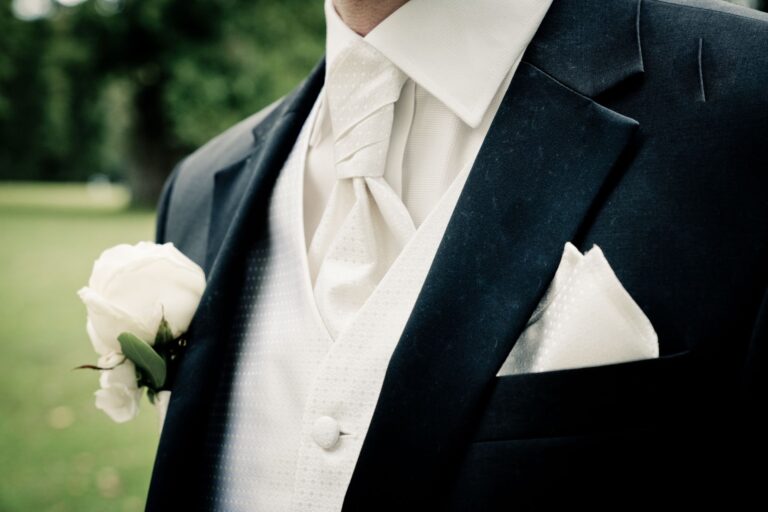
Because the velvet jacket is already a statement piece, you’ll want to keep your accessories restrained but deliberate. A simple boutonniere—perhaps a single white rose or a sprig of eucalyptus—adds a natural touch without competing with the fabric. If you’re wearing a watch, choose one with a leather strap rather than metal, which can clash with the softness of the velvet.
“The biggest mistake I see is over-accessorizing,” Delacroix warns. “A navy velvet jacket is already doing a lot of the talking. You don’t need a chunky watch, a flashy tie pin, and a bold pocket square all at once. Pick one accent piece—maybe a vintage cufflink set or a subtle lapel pin—and let the jacket be the hero.”
For bridal parties, you can coordinate without matching exactly. Groomsmen in navy velvet create a cohesive look, but you can also mix textures: one groomsman in navy velvet, another in a charcoal wool suit, and a third in a lighter blue linen jacket. The unifying element is the color palette, not the exact fabric.
Fitting the Thing Four Weeks Out
Velvet is a fabric that demands a good fit. Because it has more structure than standard wool or cotton, any imperfections in tailoring will be more obvious. You’ll want to schedule your fitting at least four to six weeks before the wedding, and ideally have a backup option in case the jacket needs adjustments.
“Rental shops are seeing huge demand for velvet jackets this spring, so you’ll want to reserve yours as early as possible,” Sharma says. “Ask your rental shop about their inventory and whether they offer a try-on at home option. If you’re in between sizes, err on the side of slightly larger—velvet can be taken in more easily than it can be let out.”
Also confirm whether the jacket comes with matching trousers or if you need to source those separately. Some rental packages include both, while others only offer the jacket. If you’re buying your own trousers, aim for a medium to dark gray or a navy that closely matches the jacket’s hue. Avoid black trousers, which can create a jarring contrast.
When to Skip the Velvet Jacket
The Beach at Noon, the Backyard Barbecue
Navy velvet is not right for every wedding. A beach ceremony at noon, a backyard barbecue reception, or a very casual daytime elopement might feel mismatched with the formality of velvet. For those settings, a linen suit or a lightweight cotton jacket in a lighter color (like blush, sage, or even a pale blue) would serve you better.
“I always tell couples to let the venue and time of day guide their fabric choices,” Delacroix says. “If your wedding is at 11 a.m. on a sunny patio, velvet is going to feel heavy and out of place. But if your reception is under the stars in a garden or a candlelit barn, velvet is practically made for that atmosphere.”
Also consider your partner’s outfit. A navy velvet jacket pairs beautifully with a satin gown, a lace dress, or even a jumpsuit in a complementary color. But if your partner is wearing something very casual—like a sundress or a linen shirt—the formality gap might feel awkward. Talk through your looks together to ensure you’re both in the same stylistic ballpark.
July in New Orleans
Even with lightweight blends, velvet is not a great choice for hot, humid climates. If your wedding is in July in the South or in a tropical destination, you’ll likely be more comfortable in a breathable fabric like cotton, linen, or a wool-silk blend.
“I’ve worked with grooms who insisted on velvet for a summer wedding in New Orleans, and they regretted it by the cocktail hour,” Sharma recalls. “If you’re set on the look, consider wearing the jacket only for the ceremony and first dance, then switching to a lighter jacket or just a vest for the reception. That way you get the statement moment without the discomfort.”
For fall and spring weddings in temperate climates, velvet is a dream. It provides just enough warmth for an early evening chill without requiring a coat.
Your Photographer, the Unbuttoned Jacket
Velvet’s texture can be a double-edged sword in photos. Under harsh direct flash, it can look flat or even washed out. But under warm, diffused lighting—like string lights, candles, or golden hour sun—it absolutely glows. Talk to your photographer about your outfit choice ahead of time, so they can adjust their lighting approach to make the most of the texture.
“Your photographer will thank you if you mention the velvet jacket during your pre-wedding consultation,” Delacroix says. “They’ll know to use softer, more directional light rather than flat on-camera flash. This makes the velvet’s nap catch the light beautifully and creates a more dimensional, editorial look in your portraits.”
You can also request a few posed shots with your jacket unbuttoned or draped over your shoulder, which reveals the lining and adds visual interest. Many rental jackets feature a contrasting lining—perhaps in a deep burgundy, gold, or a subtle paisley print—that becomes a fun surprise in candid photos.
Go ahead, try one on. Feel the texture in your hands. See how the light plays across its surface. You might just find that the jacket you never knew you wanted becomes the one you can’t imagine your day without.