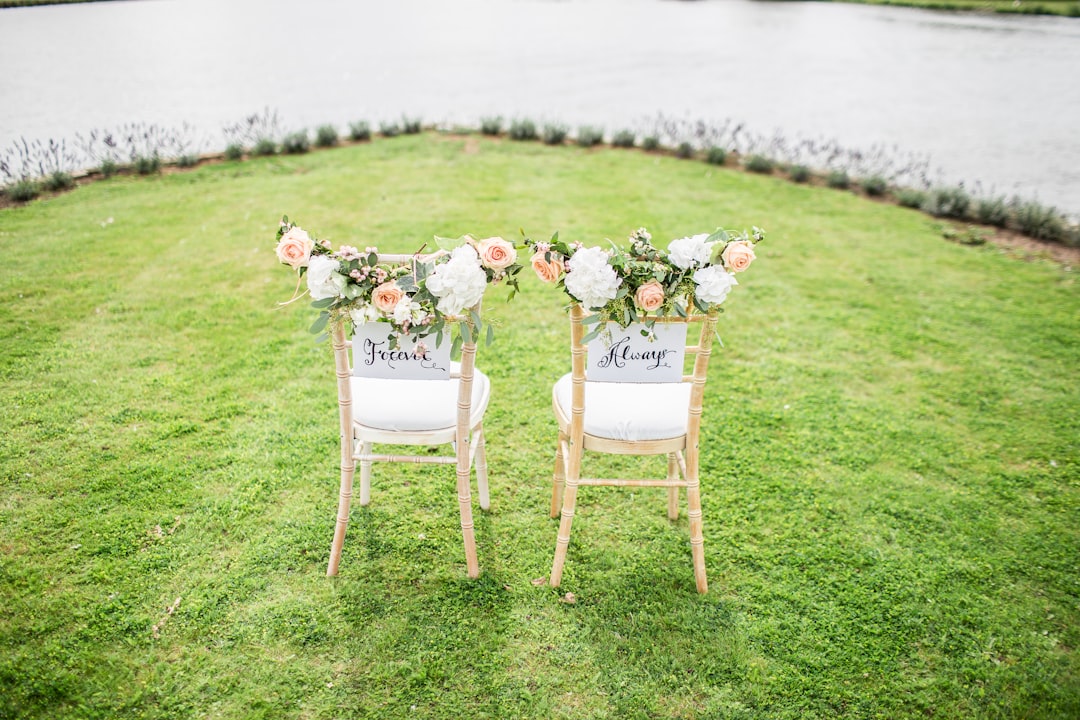
The binder was color-coded. The dahlias were impossible.
I have now attended more weddings in a professional capacity than I care to count, and I have watched otherwise sensible people — people who negotiate contracts for a living, who manage teams of dozens, who keep houseplants alive for years — lose all perspective the moment a proposal ring is on the finger. The mistakes are not the ones you read about in listicles. They are subtler, coming from a place of good intentions rather than negligence.
The first time I sat down with a couple to talk through their planning timeline, the bride-to-be opened a binder so meticulously tabbed it could have passed for a tax auditor’s filing system. She had color-coded vendor categories. She had printed out Pinterest boards in miniature. She had, as she flipped past it, already booked a florist without checking whether the studio could actually source dahlias in early April in the Pacific Northwest. That was the first lesson, and it came before the binder even closed.
- Book the venue before you book anything else. This sounds obvious, but the number of couples who lock in a photographer, a caterer, and a band before they have a signed venue contract is genuinely surprising. The venue dictates your date, your guest count ceiling, your noise restrictions, and often your vendor list — many venues maintain a preferred or exclusive vendor list, and if your dream florist isn’t on it, you either pay a surcharge or you start over. I watched a couple lose a non-refundable deposit on a caterer because the venue’s kitchen couldn’t accommodate the caterer’s equipment. The caterer was excellent. The venue was historic. Neither was willing to bend.
- Know what your venue’s contract actually says about weather. Most couples assume an indoor reception means weather isn’t a factor. But the ceremony itself is often outdoors, and the wording around rain plans varies wildly. Some venues offer a free indoor backup space. Others charge a fee to move the ceremony indoors — a fee that can easily hit the thousands if the indoor space is a secondary event room they’d otherwise rent separately. One bride I spoke with discovered, three days before her wedding, that her venue’s “rain plan” involved moving the ceremony into a hallway that seated sixty guests for her one hundred and twenty. The venue’s solution was a tent rental she had to arrange herself, at two days’ notice, in August. I called the venue coordinator directly, not the sales office, and asked: what specifically happens if it rains on my date? Do not accept a vague answer.
- Set your guest list before you set your budget — and separate it into two lists. The standard advice is to set a budget first, then build a guest list within it. In practice, the opposite is more useful, for one specific reason: catering and bar costs scale almost entirely per person, while photography, attire, and flowers scale mostly per event. A couple who invites one hundred and fifty guests instead of one hundred immediately adds roughly a third more to food and drink, plus an extra table’s worth of rentals, centerpieces, and place settings. I have seen couples cut their photo coverage from eight hours to six because they ran out of money, when the real problem was that they had invited the entire extended family out of obligation rather than desire. The two-list approach works this way: list A is people you genuinely want present. List B is people you feel you should invite. Price out list A, then price out adding list B incrementally. You may find the incremental cost changes your feelings about obligation.
- Do not hire a vendor you haven’t spoken to on the phone or in person. Email and Instagram DM are not enough. I have seen stunning portfolios that belonged to photographers whose communication style was curt to the point of hostility. I have seen florists whose online gallery looked like a botanical garden but whose actual arrangements, on the day, arrived half the size promised. A phone call reveals more than a gallery ever can: how quickly they respond, whether they ask good questions about your priorities, whether they listen or just talk. One wedding planner I know requires every couple to have at least a fifteen-minute call with each major vendor before signing. She says the couples who skip it are the ones who call her in tears three weeks out because the caterer stopped returning emails.
- Build a buffer into your timeline that feels excessive — then add another hour. Wedding timelines are nearly always optimistic. Hair and makeup runs late. The florist arrives at the venue and can’t find the loading dock. The groom’s tie doesn’t match the vest. A friend of mine who coordinates weddings for a living says the single most common crisis she handles is the couple realizing, at 2 PM, that they are an hour behind schedule and the ceremony starts at 4. The fix is not to start getting ready earlier — people are already getting ready earlier. The fix is to build in what she calls “dead time”: thirty minutes here, twenty minutes there, blocks of nothing scheduled, so that when something slips, it slides into dead time rather than into the first dance. It sounds wasteful. It is the opposite of wasteful.
- Decide on three things that matter to you — and let everything else be fine, not perfect. A photographer I work with regularly once told me about a couple who spent six hours deliberating between two shades of ivory for their table linens. Six hours. They had a three-hour drive to the venue. They had not finalized the seating chart. They had not confirmed the cake delivery time. The linens were, in the end, the exact shade they wanted, and nobody noticed. The seating chart debacle meant three guests sat at the wrong table. Those guests noticed. The trap is that wedding planning presents everything as equally important, because every vendor and every detail has a visual component and a cost attached. In reality, the guests will remember the food, the music, and whether they felt welcome. They will not remember the ribbon color. The couples who figure this out early are the ones who enjoy their own wedding.
- Eat before the ceremony. This sounds too simple to include, but I have watched bride after bride skip breakfast and lunch, then find themselves lightheaded during the vows, then realize they cannot eat during the reception because they are either talking to guests or dancing. The photographer I mentioned earlier now packs protein bars in her bag specifically for this reason. She says the hangry bride is a real phenomenon, and it shows in the photos — not the formal portraits, but the candid reception shots where the smile doesn’t quite reach the eyes. A wedding is a long day. Treat it like a marathon, not a sprint. Eat something substantial. Drink water. Sit down for five minutes.
- Assign a point person who is not you. On the day of the wedding, the couple should be unreachable. Every question, every delivery, every problem should go to a designated person — a wedding coordinator, a trusted friend, a sibling with a clipboard and a loud voice. I have seen couples who tried to handle this themselves, and it always ends the same way: the bride is on her phone during the cocktail hour, directing the band’s setup, while her guests are trying to congratulate her. The point person does not need to be a professional. They just need to be organized, calm under pressure, and willing to say no on your behalf. One couple I know gave their point person a single instruction: do not let anyone talk to us unless someone is bleeding. It worked.
- Do not chase trends that don’t fit your venue or your season. A barn wedding in October in the Midwest does not need an arch covered in tropical flowers flown in from Hawaii. A beach ceremony in June does not need heavy velvet draping. I have seen couples spend thousands on a specific aesthetic they saw on social media, only to find that the aesthetic looked jarring in their actual space — like a costume on the wrong actor. The best weddings look like a natural extension of the place and the people in it. A florist once told me that the most beautiful arrangements she ever made were the ones where she worked with what was locally available and in season, rather than ordering something from across the country that arrived half-wilted. The same logic applies to everything: the dress, the food, the music. Let the setting guide the choices.
- Write your own vows, but have a backup. I have stood at the back of enough ceremonies to know that handwritten vows can be profoundly moving — and also that they can go wrong in ways that are uncomfortable for everyone. One groom froze completely, unable to read his own handwriting through tears, and stood in silence for what felt like an eternity before his best man handed him a phone with the vows typed out. Another couple had written vows that were deeply personal but included jokes that landed poorly with the older guests. The solution is simple: write your vows, practice them aloud, and print them in a large, readable font on a card you can hold. Have a copy with your point person. And if the emotion gets the better of you, that’s fine — the guests are rooting for you, not judging your delivery.
Wedding planning asks you to make hundreds of decisions, most of them about things you have never thought about before, and it asks you to make them while your life is otherwise proceeding at its normal pace. The couples who navigate it well are not the ones who were born organized. They are the ones who recognized, early on, that perfection is not the goal — a day that feels like themselves is the goal. Whether that means a binder with color-coded tabs or a single notebook and a lot of protein bars is up to the couple. But the first step, before anything else, is knowing which battles are worth fighting at all.

📷 Photos: Jeremy Wong Weddings (Unsplash), Brunxs (Unsplash)