Build Your Wedding Timeline Backward From the Last Dance
Build Your Wedding Timeline Backward From the Last Dance
The standard wedding timeline is a trap. It starts with the ceremony, moves through cocktail hour, then dinner, then toasts, then a first dance that happens whenever the catering captain finally signals that the plates are cleared. By the time the dance floor opens, guests have already checked their watches twice. The couple spends the reception making micro-decisions about when to cut the cake versus when to throw the bouquet, all while the photographer hovers with a schedule that only they can see.
A growing number of planners and savvy couples have flipped the entire logic. They build the timeline from the end. The last dance is non-negotiable. Everything else fits backward from that fixed point.
The 10 p.m. Hard Stop Nobody Reads
The last dance is the one moment that cannot be moved. A ceremony can start ten minutes late without disaster. Dinner service can stretch an extra course. But a venue’s sound ordinance, staff curfew, or booked-out reception space creates an absolute deadline that no amount of negotiation will shift. Most venues in cities with residential neighbors enforce a hard stop by 10 p.m., sometimes 9:30. A hotel ballroom booked for a Saturday night might have an 11 p.m. cutoff that includes breakdown time.
That end time determines every other number in the evening. The couple who wants a full four hours of open dancing cannot have a four-course plated dinner. The couple who wants a sit-down meal and a live band that needs a thirty-minute teardown between sets has to make choices about where the minutes go.
One planner in Portland mapped out a standard six-hour reception window — 5 p.m. to 11 p.m. — and found that the average couple lost nearly ninety minutes to transitions alone: the move from ceremony to cocktail hour, the bottleneck at the bar, the reset between dinner and dancing, the line for the photo booth that someone decided to set up five feet from the dessert table. By the time the DJ actually played the first song at full volume, only about two hours of real dancing remained. That couple had booked a live band and paid for six full hours of reception time.
Building backward forces those hidden minutes into plain sight.
Lock the End Time Before Anything Else
The first call is not to the caterer or the photographer. It is to the venue coordinator, and the question is not “What time can we start?” but “What time must every single guest, vendor, and piece of rented furniture be off the premises?”
That number differs depending on the space. A barn venue in rural Pennsylvania with no neighbors for a mile might allow midnight with an hour of breakdown afterward. A rooftop space in downtown Chicago will have a 10 p.m. hard stop written into the contract, with a fine for every fifteen minutes past. A private home rental through a platform like Airbnb or VRBO often has noise restrictions that kick in at 9 p.m., and a neighbor who is not afraid to call the police.
One couple learned this the expensive way. They booked a popular warehouse venue in Los Angeles that allowed events until midnight. They planned a 6 p.m. ceremony, an elaborate dinner service, and a full night of dancing. What they did not realize until the week of the wedding was that the venue required all vendors to begin loading out at 11 p.m., and that the parking lot shut its gates at 11:30. Their 6 p.m. to midnight reception was actually a 6 p.m. to 11 p.m. reception with thirty minutes of chaos at the end.
The correct number to ask for is the time the last guest must exit the building. Not the time the band stops playing. Not the time the bar closes. The time the last person walks out the door. That is the real end of the night.
Three Hours of Dancing or Three Courses
Once the hard end time is known, the next question is how much of that window belongs to dancing. This is not an aesthetic preference. It is a structural decision that determines the pace of everything before it.
A couple who wants three hours of open dancing needs to start the first dance by 7:30 or 8 p.m. at the latest if the venue cuts off at 11. That means dinner service must be fully completed by roughly 7 p.m. That means cocktail hour must wrap by 6:15. That means the ceremony must begin by 4:30 or 5. The math is unforgiving.
A couple who wants only an hour and a half of dancing has dramatically more flexibility. They can stretch cocktail hour, add an extra course, build in a twenty-minute break for guests to step outside and catch their breath. They can even schedule a gap between the ceremony and the reception — something that has become more common among couples who want to take formal portraits with all their guests present during cocktail hour rather than before the ceremony.
The key is to admit the preference early. Many couples say they want “a party” but plan a timeline that accommodates a dinner party instead. The two are not the same thing.
The Fifteen Minutes You Lose Every Time Everyone Moves
The most common mistake in a forward-built timeline is that it accounts for the duration of specific events — thirty minutes for cocktail hour, sixty minutes for dinner, three minutes for the first dance — but ignores the time between them. Those gaps add up fast.
A typical reception has at least six major transitions: ceremony to cocktail hour, cocktail hour to grand entrance, grand entrance to dinner seating, dinner to toasts, toasts to first dance, first dance to open dance floor. Each one involves some combination of guests moving locations, staff resetting rooms, and vendors adjusting equipment. Even a well-organized room shift takes five to seven minutes. A messy one takes fifteen.
A planner in Austin once timed a seemingly smooth transition between dinner and dancing at a wedding where the couple had scheduled a thirty-minute gap for the band to set up. The actual gap stretched to forty-seven minutes because the caterer was still clearing plates from a table in the corner that blocked the band’s access to the stage. Nobody noticed until the band was standing there holding their instruments, waiting for a bus tub to be removed.
The fix is to build a formal transition buffer into the timeline for every room change. Ten minutes minimum per transition. Fifteen is safer. That buffer is not padding. It is the time that actually makes the next thing happen on schedule.
First Dance at 7:15
The backward timeline solves one of the most persistent wedding planning arguments: when to take formal portraits. The forward timeline typically schedules them between the ceremony and the reception, which means guests wait through an extended cocktail hour while the couple poses with every combination of family members. The backward timeline reveals that this is often the wrong place.
If the last dance controls everything, then the hour before the ceremony is actually the most valuable slot for photos that do not require the couple to be present. Family formal portraits, full wedding party shots, and the individual portraits of parents, siblings, and grandparents can all be completed before the ceremony starts. The couple only needs to be present for the shots that include them.
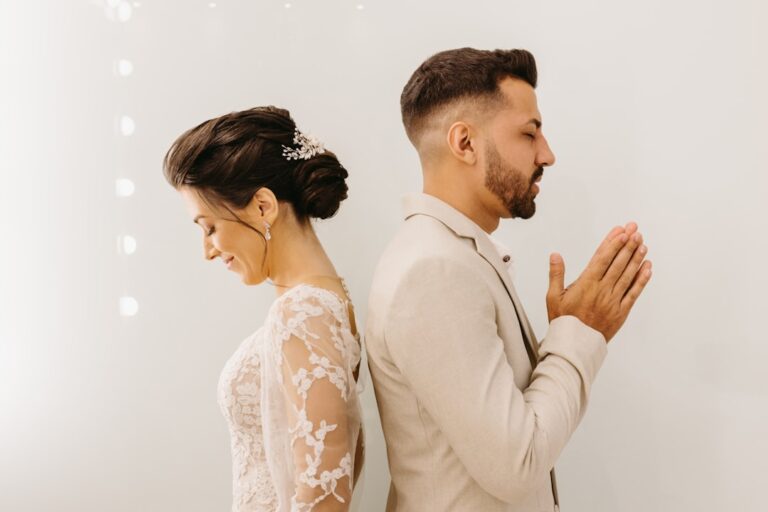
A growing number of photographers now offer a “first look” session that covers all couple portraits before the ceremony. This is not just a trend. It is a practical response to the timeline pressure that a backward build reveals. When the couple’s portraits are done before the ceremony, cocktail hour becomes a genuine hour of guest enjoyment rather than a holding pattern. The couple can join their guests immediately after the ceremony, eat appetizers, drink champagne, and actually socialize. The dance floor opens earlier.
One photographer in Nashville told a couple who insisted on post-ceremony portraits that they would lose at least forty-five minutes of dancing time. That couple moved the portraits to before the ceremony, started their first dance at 7:15, and had the dance floor packed by 7:45. They were still dancing when the venue lights came up at 11.
Dinner and the Dance Floor Overlap
Dinner service is the variable that destroys most timelines. A plated dinner for 150 guests can take ninety minutes from first course to last plate cleared. A buffet for the same number can take forty-five. A family-style service splits the difference but introduces its own variables — the passing of dishes slows down conversation, which slows down eating, which pushes the whole meal later.
The backward timeline forces a decision about dinner format before the menu is even chosen. If the dance floor needs to open by 8 p.m., a plated dinner is a bad idea unless the couple is willing to eat at 6. If the couple wants a 9 p.m. first dance, dinner can be more leisurely, but then the dancing window shrinks.
Some couples solve this by serving dinner as a seated appetizer-and-entree combination with no salad course, cutting the meal time by fifteen minutes. Others skip the formal dinner entirely and serve heavy passed appetizers and food stations throughout the evening, so guests eat while they socialize and the dance floor opens immediately after the first dance.
The extreme version is a reception format that has gained traction in New York and Los Angeles: the “dancing dinner.” Stationary high-top tables replace seated rounds. Food is served continuously from multiple stations. Guests eat standing, in small groups, while the DJ plays background music that builds gradually toward the first dance. The transition from “eating” to “dancing” happens so gradually that nobody notices a formal shift. The first dance becomes just another song rather than a scheduled event.
This format is not for everyone. Seated dinner has its own value — it forces guests to talk to people they do not know, it creates a natural rhythm to the evening, and it is the only way to guarantee that everyone gets a full meal. But couples who prioritize dancing over dinner structure should admit that and choose accordingly.
Two Toasts, Five Minutes Each
Toasts are the single biggest eaters of dance floor time. A best man who says he needs three minutes often takes five. A maid of honor who says she has “a few quick words” can run eight. When six people are toasting — the couple, parents, best man, maid of honor, and a sibling — the speeches alone can consume forty minutes of the reception window.
The backward timeline exposes this clearly. A couple who wants three hours of dancing and has a 10 p.m. venue cutoff needs to start the first dance by 7. If dinner ends at 6:30, that leaves only thirty minutes for toasts. That simply is not enough time for multiple speakers.
The solution is to limit toasts to two people. The best man and the maid of honor get five minutes each. Everyone else who wants to speak does so during the rehearsal dinner or at the after-party. This is not rude. It is a recognition that a long toast serves the speaker more than the couple or the guests.
One couple in Denver announced at the top of dinner that any guest who wanted to toast could do so during the final ten minutes of the meal. They had one person actually stand up. The rest of the room kept eating, and the dance floor opened twelve minutes earlier than scheduled.
A Spreadsheet That Recalculates
A written timeline is a static document. A spreadsheet is a living one. The couple who builds their timeline backward in a spreadsheet can adjust variables in real time — what happens to the dance start time if dinner takes fifteen minutes longer than expected, or what happens to the ceremony start if the first look runs late.
The spreadsheet should have one row per event or transition. Columns for start time, end time, duration, and buffer minutes. The last row is the venue’s hard cutoff. The second-to-last row is the last dance. Every row above that is calculated backward from the last dance. Changing one number automatically shifts everything before it.
A planner in Chicago shared a timeline template that included a column for “worst case” — the maximum amount of time each event could reasonably stretch. When she applied it to a couple’s original forward-built timeline, the worst case pushed the last dance to 11:45. The venue cut off at 11. That couple rebuilt from scratch.
One Hour Before the Last Dance
The hour before the last dance is when the timeline either holds together or falls apart. The cake has been cut. The bouquet has been thrown. The dance floor has been full for two hours. The energy is at its peak. The smartest thing a couple can do is clear the schedule entirely for that hour. No more events. No more announcements. No more formal transitions. Just music, guests, and the couple moving through the room.
The last dance itself should be a song that means something, but it should also be a song that does not require a specific mood. A slow song that ends the night on a quiet note works for some couples. An upbeat song that sends guests out on a high note works for others. The important thing is that the couple knows exactly which song it is and exactly when it starts, because that moment is the fixed point from which everything else was built.


📷 Photos: Leonardo Miranda (Unsplash), X X (Unsplash), Leonardo Miranda (Unsplash)